
La Rochelle combines maritime history, Atlantic beaches, island access and excellent cycling infrastructure in a compact, walkable city. For British visitors, it offers a manageable alternative to larger French destinations — you can see the highlights in a weekend, or spend a week exploring the city and surrounding islands without feeling rushed. This guide covers what to do, how long each activity takes, what it costs, and when to visit to avoid crowds.
See our complete La Rochelle guide for details on getting there, weather, and accommodation.
Quick Navigation
- → The Old Port (Vieux Port)
- → The Three Towers
- → La Rochelle Aquarium
- → Cycling (Yélo Bikes and Île de Ré)
- → Les Halles Market
- → Maritime Museum
- → Natural History Museum
- → Bunker Museum
- → Les Minimes Beach and Marina
- → Boat Trips (Fort Boyard, Islands)
- → Historic Centre Walking
- → Free Activities
- → Bad Weather Options
- → Seasonal Differences
- → How Long to Spend in La Rochelle
- → Common Mistakes (UK Visitors)
- → Final Recommendations
The Old Port (Vieux Port)
Time required: 1–2 hours (or longer if dining)
Cost: Free to explore, €3–5 for coffee, €15–25 for seafood lunch
Best time: Early morning (07:00–09:00) or late evening (19:00 onwards)
The Vieux Port is the heart of La Rochelle and the natural starting point for any visit. Flanked by the three medieval towers, it is where the city feels most alive — fishing boats, sailing yachts, café terraces and street performers create a lively atmosphere without feeling overwhelming.
The quays (Quai Duperé, Cours des Dames) are pedestrianised and lined with restaurants. Quality varies significantly — avoid the most touristy spots directly facing the towers where prices are inflated (€25–30 for mediocre moules-frites) and instead explore side streets like Rue Saint-Jean du Pérot, known locally as the “food street.” Here you will find better restaurants at better prices (€15–20 for moules, €25–35 for a full seafood meal).
The Old Port is particularly atmospheric in the evening when the towers are lit. Sunset walks along the ramparts are popular with locals. If visiting in July or August, expect significant crowds 11:00–19:00. Early mornings (07:00–09:00) offer near-empty quays and good light for photos.
The Three Towers
Time required: 2–3 hours (to visit all three properly)
Cost: €9.50 adults, free for under-18s and EU nationals aged 18–25
Best time: Weekday mornings (09:30–11:30), avoid weekends in summer
La Rochelle’s three medieval towers are the city’s most iconic landmarks and genuinely worth visiting. A single €9.50 ticket grants access to all three.
Tour Saint-Nicolas: The largest tower, 42 metres tall, built in the 14th century. Climb the spiral staircase to the top for panoramic views over the Old Port, the city and the Atlantic. The tower is well-preserved with exhibits on its defensive history. Budget 45 minutes–1 hour. Views are best on clear days — avoid if weather is poor.
Tour de la Chaîne: Originally connected to Tour Saint-Nicolas by a chain that was raised at night to close the harbour. The top was destroyed in the 17th century when stored gunpowder exploded. Smaller than Saint-Nicolas but atmospheric. Budget 30 minutes. Included in the same €9.50 ticket.
Tour de la Lanterne: The most interesting of the three. Built as a lighthouse and later used as a prison, the walls are covered in 500+ years of graffiti carved by prisoners — names, dates, ships, messages. Genuinely atmospheric and unique. Budget 45 minutes–1 hour. Highly recommended.
UK price comparison: La Rochelle €9.50 vs Tower of London £33.60, Edinburgh Castle £19.50. Excellent value.
Avoid weekends and school holidays (July–August) when queues form. Weekday mornings (09:30–11:30) are quietest. The towers close 18:00–19:00 depending on season — check before visiting.
La Rochelle Aquarium
Time required: 1.5–2 hours
Cost: €18.50 adults, €14.50 juniors (13–17), €12.50 children (3–12)
Best time: Late evening (20:30–23:00) in summer, mornings (09:00–11:00) outside peak season
One of the largest private aquariums in Europe, housing 12,000 marine animals across 82 tanks. Highlights include the shark tank (1.5 million litres with bull sharks and reef sharks), jellyfish gallery with 360° tunnel, and the sea turtle rescue programme where injured turtles are rehabilitated and released with GPS tracking chips.
The aquarium is excellent and genuinely engaging for all ages. However, there is one critical timing issue: avoid July–August daytime visits (11:00–18:00). During peak summer, the aquarium becomes dangerously overcrowded — stifling, sweaty, difficult to move, impossible to see exhibits properly. French school groups and tourist coaches arrive mid-morning and the experience deteriorates significantly.
The solution: visit late evening (20:30–23:00) in July–August when the aquarium stays open until midnight. The same exhibits, half the crowd, transformed experience. Outside peak season (September–June), mornings (09:00–11:00) are manageable.
Tickets are timestamped — book online in advance at aquarium-larochelle.com to guarantee entry. Budget €62 for a family of four (2 adults, 2 children).
UK price comparison: La Rochelle €18.50 vs SEA LIFE Brighton £19.50, Plymouth Aquarium £17.50. Similar pricing.
See our complete La Rochelle Aquarium guide for full details on exhibits, facilities and timing strategy.
Cycling (Yélo Bikes and Île de Ré)
Time required: 2 hours (city centre) to full day (Île de Ré)
Cost: First 30 mins free, then €1 per 30 mins (Yélo self-service). Private hire €10–15/day
Best time: Any time, but avoid midday heat in July–August
La Rochelle has one of the best cycling infrastructures in France. The Yélo bike scheme (bright yellow bikes at docking stations throughout the city) offers first 30 minutes free, then €1 per 30 minutes. Perfect for short trips — Old Port to Les Minimes beach (15 minutes), Old Port to aquarium (10 minutes), exploring the historic centre.
For longer rides, private bike hire (€10–15/day) is better value. Available near the Old Port from multiple operators.
Cycling to Île de Ré: The island is connected to La Rochelle by a 2.9-kilometre bridge with dedicated cycle path. From La Rochelle city centre to the island is approximately 10 kilometres (40 minutes). The bridge is free for cyclists (cars pay €16 toll in summer).
Île de Ré is a cycling paradise — 110 kilometres of flat, well-signposted cycle paths, white-washed villages, salt marshes, oyster beds and sandy beaches. You can cycle the entire island in a day, or take it slower and explore individual villages (Saint-Martin-de-Ré, Ars-en-Ré, La Flotte).
For a full Île de Ré day trip: leave La Rochelle by 09:00, cycle to Saint-Martin-de-Ré (1.5 hours total from city centre), explore the town and harbour (1 hour), cycle to Ars-en-Ré or the Phare des Baleines lighthouse (1–1.5 hours), lunch (1 hour), return to La Rochelle by 17:00–18:00. Total cycling: 40–50 kilometres. Achievable for moderately fit cyclists.
Alternatively, take the boat shuttle from La Rochelle Old Port to Saint-Martin-de-Ré (1 hour, €20–25 return, bikes allowed) and cycle the island without the bridge ride.
Best months: May–September. July–August very busy — book bike hire in advance on Île de Ré.
Les Halles Market
Time required: 30 minutes–1 hour
Cost: Free to browse, €8–15 for oysters/cheese/picnic supplies
Best time: Weekday mornings (08:00–11:00), avoid Saturday peak crowds
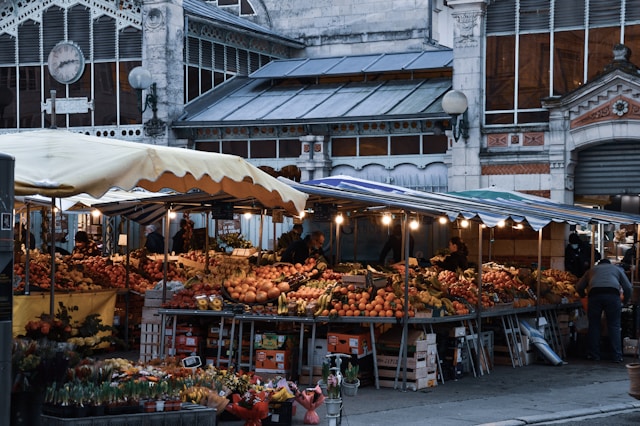
The covered market in the heart of the historic centre, open every morning 07:00–13:00 (approximately). The building dates from the 19th century and retains its original character — iron framework, high ceilings, natural light.
This is where locals buy fresh produce, seafood, cheese, charcuterie, bread and wine. For British visitors, it is the best place to experience French food culture without the tourist mark-up of Old Port restaurants.
Highlights: oysters from Marennes-Oléron (€8–12 per dozen, fresher and cheaper than restaurants), local goat’s cheese (Chabichou du Poitou), Pineau des Charentes (sweet fortified wine, €8–12/bottle), fresh bread and pastries.
Many stalls offer tastings. Arrive with an open mind and willingness to try. Stallholders speak limited English but are friendly and patient.
Best for assembling picnic supplies for beach or island trips. Budget €15–20 for bread, cheese, charcuterie, fruit and wine for two people.
Saturday mornings are busiest (locals doing weekly shop). Weekdays quieter. Arrive by 11:30 for best selection — popular items sell out by midday.
Maritime Museum (Musée Maritime)
Time required: 1.5 hours
Cost: €9 adults, €6.50 children
Best time: Any time, good wet-weather option
Located on the waterfront near the Old Port, the Maritime Museum allows visitors to board three historic ships: France 1 (meteorological frigate), Angoumois (trawler), and Saint-Gilles (tugboat). Explore engine rooms, navigation bridges, crew quarters and admire maritime artefacts, charts and models.
Genuinely engaging for anyone interested in ships and maritime history. Hands-on exhibits suitable for children. The museum also includes permanent exhibitions on La Rochelle’s seafaring past and temporary exhibits.
Good wet-weather option. Budget 1.5 hours to tour all three ships and exhibitions properly. Less crowded than the aquarium, more atmospheric than the Natural History Museum.
Natural History Museum (Muséum d’Histoire Naturelle)
Time required: 1–2 hours
Cost: €6 adults, free first Sunday of each month (except July–August)
Best time: Rainy afternoons, first Sunday for free entry
Five floors of collections covering zoology, palaeontology, archaeology and ethnology. Highlights include the first giraffe to arrive in France (1826) and an orca skeleton.
Low-key but well-curated. Good value at €6, excellent value on free Sundays (September–June). Suitable for curious children and anyone interested in natural history. Less impressive than the aquarium or Maritime Museum, but a solid wet-weather option.
Budget 1–1.5 hours. Combine with Les Halles market (5 minutes’ walk) for a morning activity.
Bunker Museum (Musée des Bunkers)
Time required: 1 hour
Cost: €8 adults
Best time: Any time
A World War II bunker built in 1941 as a German Navy air raid shelter. The 280-square-metre underground facility housed 62 officers and two admirals and includes barracks, offices, toilets and a bar.
Self-guided tours with videos, artefacts and reconstructed scenes. Genuinely atmospheric for anyone interested in WWII history. Niche appeal, but well-executed. Budget 1 hour.
Located in the city centre near Les Halles. Good combination: market in the morning, bunker museum after lunch.
Les Minimes Beach and Marina
Time required: 2–4 hours
Cost: Free
Best time: June–September, weekday mornings less crowded
Les Minimes is a sandy beach and marina approximately 3 kilometres south of the Old Port. The marina is the largest on the Atlantic coast with 3,500 berths — impressive for sailing enthusiasts.
The beach is family-friendly, less crowded than Île de Ré beaches, and suitable for swimming June–September (sea temperature 17–21°C). Facilities include lifeguards (July–August), beach volleyball, cafés and toilets.
Reach Les Minimes by bike (15 minutes from Old Port), bus (Yélo line 10, €1.50), or walk (30 minutes). Free to access.
Not the best beach on the Atlantic coast, but convenient if staying in La Rochelle and wanting a beach day without travelling to the islands. Combine with a visit to the aquarium (10 minutes’ walk).
Boat Trips (Fort Boyard, Islands)
Time required: 2–3 hours (Fort Boyard), full day (island trips)
Cost: €30–40 (Fort Boyard), €20–25 (Île de Ré shuttle), €40–60 (island day trips)
Best time: June–September, book in advance for July–August
Fort Boyard: The offshore fortress made famous by the 1990s French TV game show. The fort is not open to the public, but boat trips from the Old Port offer close-up views and commentary on its history (built 1801–1857 to protect the naval arsenal at Rochefort). Tours last approximately 2–3 hours, cost €30–40, depart daily April–September. Popular with French visitors, less so with Britons unfamiliar with the TV show. Recommended if the weather is good and you enjoy boat trips.
Île de Ré shuttle: Boat from La Rochelle Old Port to Saint-Martin-de-Ré (1 hour crossing, €20–25 return, bikes allowed). Good option if you want to explore Île de Ré without cycling across the bridge. Departs daily April–September.
Island day trips: Organised excursions to Île d’Oléron or Île d’Aix. Full-day trips with guided tours, lunch stops, time to explore. Budget €40–60. Less flexible than independent travel but convenient if short on time.
Book boat trips online or at the Old Port. July–August departures fill up — book 1–2 weeks ahead.
Historic Centre Walking
Time required: 1–2 hours
Cost: Free
Best time: Any time, early morning or late afternoon for photos
La Rochelle’s medieval centre is characterised by pale limestone buildings, arcaded streets and light grey shutters. The arcades date from the 17th century and provide shelter from rain and sun — useful in a city where Atlantic weather systems bring frequent showers.
Key streets: Rue du Palais (historic buildings, cafés), Rue Chaudrier (architecture), Rue des Merciers (shopping heart, fashion boutiques). The streets are largely pedestrianised. No set route required — wander and explore.
The historic centre is compact. A leisurely walk from the Old Port through the main streets to the train station takes 20–30 minutes. Budget 1–2 hours to explore properly, stop for coffee, browse shops.
Free activity. Combine with Les Halles market, the towers, or lunch at a café.
Free Activities
For budget-conscious travellers or those wanting to experience La Rochelle without spending significantly:
1. Walk the ramparts and Old Port: Free, atmospheric, excellent at sunset
2. Yélo bikes (first 30 mins): Free for short trips around the city
3. Les Minimes beach: Free access, swimming June–September
4. Historic centre walking: Free, well-preserved medieval streets
5. Les Halles market (browsing): Free to explore, minimal cost for picnic supplies
6. Cycling the bridge to Île de Ré: Free (cars pay €16 toll)
7. Natural History Museum (first Sunday): Free September–June
A free day in La Rochelle: Morning walk around Old Port and ramparts, cycle to Les Minimes beach (Yélo bike, first 30 mins free), swim, picnic from Les Halles market (€10–15), afternoon exploring historic centre, evening watching sunset from the towers (free to admire from outside). Total cost: €10–15 for food.
Bad Weather Options
La Rochelle’s Atlantic location brings rain year-round. If weather is poor:
1. Aquarium: Indoor, 1.5–2 hours, €18.50
2. Maritime Museum: Ships are sheltered, 1.5 hours, €9
3. Natural History Museum: Fully indoor, 1–2 hours, €6
4. Bunker Museum: Underground, 1 hour, €8
5. Les Halles market: Covered, 30 mins–1 hour, minimal cost
6. Shopping (Rue des Merciers): Arcaded streets provide shelter
7. Seafood restaurants: Lunch at Rue Saint-Jean du Pérot, €15–25
A rainy day in La Rochelle: Morning at Les Halles market (covered), Maritime Museum (1.5 hours), lunch at covered café, afternoon at aquarium or Natural History Museum, evening at seafood restaurant. Entirely sheltered, minimal walking in rain.
Seasonal Differences
Summer (June–August): Best weather (22–26°C, 8–9 hours sunshine), warmest sea (17–21°C), all attractions open full hours, boat trips operating daily, Île de Ré accessible. However, crowds peak July–August, prices rise 30–50%, aquarium dangerously busy midday. UK flights operating. Optimal for beach, cycling, island trips.
Spring (April–May): Pleasant weather (13–19°C), fewer crowds, cheaper accommodation. Sea still cool (12–14°C), some attractions on reduced hours, fewer boat trips. Good for sightseeing, cycling, walking. UK flights begin late March.
Autumn (September–October): Early September still warm (18–22°C), sea temperature pleasant (18–19°C), fewer crowds, cheaper prices. By October, weather deteriorates (15–18°C, rain increases), sea too cold for swimming. Good for museums, markets, restaurants. UK flights cease mid-October.
Winter (November–March): Cold (6–11°C), wet (80–95mm monthly rainfall), minimal sunshine (2–5 hours/day). Many attractions on reduced hours, no UK flights (nearest airport Poitiers, 90 mins). Not recommended unless seeking rock-bottom prices and solitude. Focus on indoor activities — museums, markets, restaurants.
See our La Rochelle weather guide for month-by-month climate details and best times to visit.
How Long to Spend in La Rochelle
Weekend (2–3 days): Sufficient for highlights — Old Port, towers, aquarium, historic centre, one island day trip (Île de Ré). Most popular option for UK visitors flying in for short break.
Week (5–7 days): Allows relaxed exploration of La Rochelle, multiple island trips (Île de Ré, Île d’Oléron, Fort Boyard), beach time at Les Minimes, cycling, museums, restaurants. Recommended for families or anyone wanting to explore properly without rushing.
Extended stay (10+ days): Combine La Rochelle with Cognac (1.5 hours), Bordeaux (2 hours), or Poitiers (90 minutes east). See our Poitiers guide for year-round UK flight access and things to do. Marais Poitevin (1 hour), Rochefort (45 mins). Ideal for ferry travellers with car.
Common Mistakes (UK Visitors)
1. Visiting the aquarium July–August midday: Dangerously crowded. Visit 20:30+ or avoid peak season.
2. Not booking accommodation ahead: July–August fills up 12–16 weeks in advance. Book early.
3. Expecting Mediterranean sea temperatures: Even August peaks at 20–21°C. Bring wetsuit for extended swimming.
4. Underestimating cycling distances: La Rochelle to Île de Ré lighthouse is 25–30km each way. Moderately fit required.
5. Eating at touristy Old Port restaurants: Overpriced, variable quality. Explore Rue Saint-Jean du Pérot instead.
6. Not checking tower opening hours: Close 18:00–19:00 depending on season. Arrive by 16:00 to visit comfortably.
7. Visiting in November: Wettest month, no UK flights, many attractions closed. Avoid unless seeking extreme solitude.
Final Recommendations
For a well-balanced La Rochelle visit (weekend): Day 1: Morning arrival, Old Port walk, towers (2–3 hours), lunch at Rue Saint-Jean du Pérot, afternoon historic centre and Les Halles market, evening seafood dinner. Day 2: Cycle to Île de Ré (leave 09:00), explore Saint-Martin-de-Ré and beaches, return by 18:00, evening at aquarium (20:30 in summer, 10:00 outside peak). Day 3: Morning Maritime Museum or Natural History Museum, lunch, afternoon at Les Minimes beach or boat trip to Fort Boyard, departure.
This covers the essential La Rochelle experience — maritime heritage, island access, cycling, seafood, beaches — without feeling rushed. Adjust based on weather, interests and energy levels.
Approach La Rochelle as a relaxed coastal city first, a sightseeing destination second, and you will enjoy it immensely.
Photo de Jade Marchand sur Unsplash