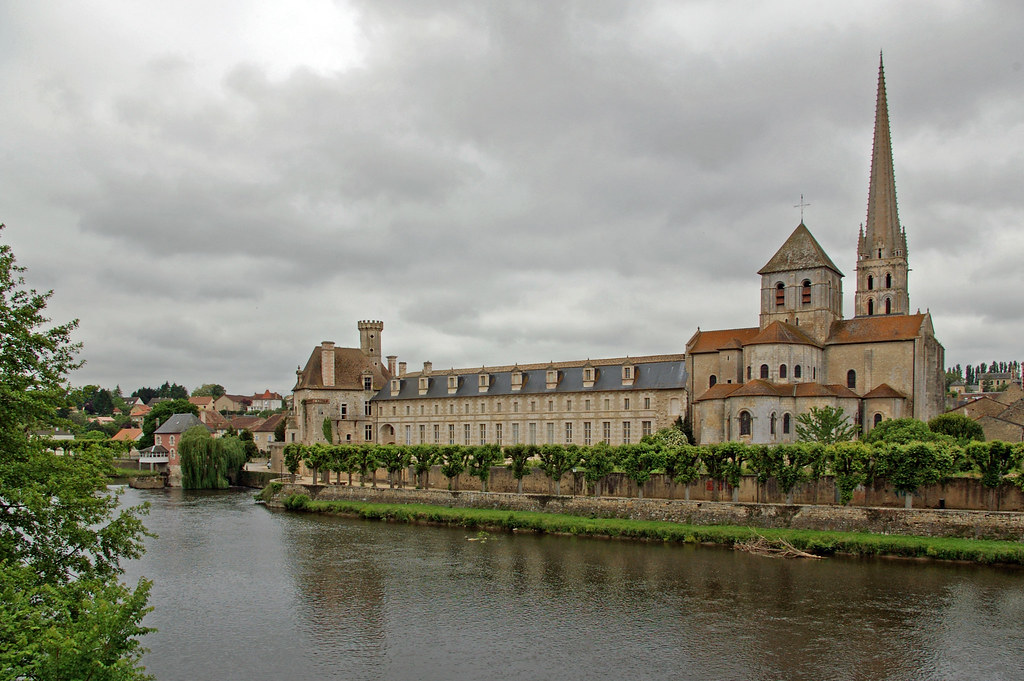
At 45 kilometres east of Poitiers—a comfortable 40-minute drive along the D951 through Chauvigny—Saint-Savin Abbey delivers one of Europe’s most extraordinary collections of Romanesque frescoes. This UNESCO World Heritage Site, often called the “Sistine Chapel of the Romanesque,” preserves over 400 square metres of 11th and 12th-century wall paintings spanning the abbey church’s entire nave ceiling. For British visitors staying in Poitiers, Saint-Savin provides a compelling alternative to Loire Valley châteaux: medieval art of genuine international significance in an authentic village setting, free from tour bus crowds. This is the complete guide to visiting Saint-Savin Abbey from Poitiers.
Why Visit Saint-Savin Abbey from Poitiers?
Saint-Savin Abbey’s fresco cycle represents the most complete Romanesque painted church interior surviving in France. The nave ceiling displays 17 biblical scenes from Genesis and Exodus painted directly onto stone vaulting around 1100 CE—depictions of Noah’s Ark, the Tower of Babel, Moses and Pharaoh rendered in ochre, red, yellow, and green pigments that remain remarkably vivid after 900+ years. Unlike most medieval church frescoes destroyed during religious conflicts or covered by later decorative schemes, Saint-Savin’s paintings survived intact because the abbey’s relative poverty prevented expensive renovations. UNESCO designation in 1983 recognized this survival as globally significant. The abbey church itself—a vast Romanesque structure with soaring columns and perfect acoustics—would justify the journey even without the frescoes. Combined with the charming riverside village of Saint-Savin (population 900), this creates an exceptional half-day excursion easily combined with Chauvigny’s castles.
Getting to Saint-Savin from Poitiers
By Car (Recommended): The drive from Poitiers to Saint-Savin covers 45km via the D951 eastbound through Chauvigny. Journey time is 35-45 minutes in normal traffic. No motorway tolls. Parking in Saint-Savin is straightforward—a free car park sits directly beside the abbey entrance (Place de la Libération). The route passes through Chauvigny at the halfway point, making a combined Chauvigny-Saint-Savin day trip highly practical: visit Chauvigny’s five castles in the morning (09:00-12:00), drive 20 minutes to Saint-Savin for afternoon abbey visit (14:00-16:00), return to Poitiers by 17:00.
By Train: No direct rail service connects Poitiers to Saint-Savin. The nearest station is Chauvigny (6km west), requiring onward bus or taxi. For a car-free visit, consider a guided tour from Poitiers or hire a taxi for the day (approximately €80-100 round trip including waiting time).
The Abbey Church & Frescoes
Guided Visits: Saint-Savin Abbey operates mandatory guided tours only—independent exploration is not permitted to protect the fragile frescoes. Tours depart hourly 10:00-17:00 April-September, 14:00-16:00 October-March (closed January). Duration 45-60 minutes. Entry €8 adults, €6 concessions, under-18s free. English-language audio guides available (included in ticket price). The abbey provides binoculars for viewing ceiling details—the frescoes sit 17 metres overhead, making close examination without optical aid difficult.
The Fresco Cycle: The nave ceiling displays 17 scenes across 400+ square metres: Creation to Tower of Babel on the entrance side, Moses and Exodus towards the altar. Key scenes include Noah’s Ark (remarkably detailed ship construction), Abraham and Isaac, Moses and the Burning Bush, Pharaoh’s army drowning in the Red Sea. The crypt preserves additional frescoes depicting the martyrdom of Saint-Savin and Saint-Cyprien. Photography is permitted without flash. The colours—ochre, vermillion, yellow, green—derive from local mineral pigments mixed with lime, explaining their exceptional preservation. Art historians value Saint-Savin for documenting Romanesque narrative techniques before Gothic styles emerged.
Church Architecture: Beyond frescoes, the abbey church itself represents outstanding Romanesque design: 11 bays, 76 metres long, proportions creating perfect acoustic resonance. The columns—76 in total—support barrel vaulting without buttresses, a structural achievement for 1100. Classical music concerts utilize the acoustics May-September (check abbey website for schedule).
Saint-Savin Village
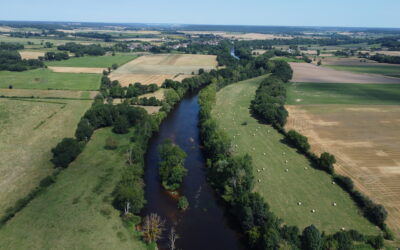
The village of Saint-Savin (population 900) sits on the Gartempe river beneath the abbey. A stone bridge dating to medieval times crosses to the opposite bank where riverside walks follow the Gartempe upstream 2km to quiet picnic spots. The village center preserves traditional stone houses, a small market square, and two cafés. This is rural France at its most authentic—no souvenir shops, no tourist infrastructure beyond the abbey. Allow 30 minutes for village exploration if time permits.
Where to Eat
Le Médiéval (Village Center): Traditional French restaurant on Place de la Libération serving regional cuisine—rabbit terrine, Poitou goat cheese salad, duck confit. Lunch formula €16-20, dinner €25-32. Open Wednesday-Sunday, closed Monday-Tuesday. Reservations advised weekends. Address: 2 Place de la Libération.
Picnic Option: No supermarket in Saint-Savin village. Purchase supplies in Chauvigny (Intermarché on Route de Poitiers) before continuing to Saint-Savin. Riverside picnic spots along the Gartempe provide pleasant lunch settings.
Combining with Chauvigny
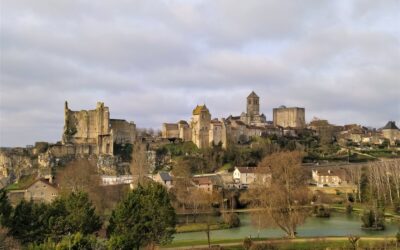
Chauvigny sits 20km (15 minutes) west of Saint-Savin on the return route to Poitiers. A combined visit works perfectly: depart Poitiers 08:30, arrive Chauvigny 09:00, explore five medieval castles + Giants of the Sky raptor show 09:00-12:30, lunch in Chauvigny 12:30-14:00, drive to Saint-Savin 14:00-14:20, abbey guided tour 14:30-15:30, village walk 15:30-16:00, return Poitiers 16:45-17:15. This combines two outstanding but contrasting medieval sites in a single day. Total cost for two people: fuel €12-15, Chauvigny entry €22, Saint-Savin entry €16, lunch €30-40. Excellent value compared to Loire châteaux day trips.
Practical Information
Best Time to Visit: May-June and September offer ideal conditions—mild weather, manageable visitor numbers, full opening hours. July-August see moderate crowds but the abbey never feels overwhelming (unlike major Loire châteaux). October-April reduce hours but provide authentic off-season atmosphere. Avoid January when the abbey closes for annual maintenance. For seasonal planning, see our best time to visit Poitiers guide.
How Long to Budget: Abbey guided tour 60 minutes, village exploration 30 minutes, total visit 90 minutes minimum. Add driving time (35-45 minutes each way from Poitiers) for a 3-hour excursion. Combined Chauvigny-Saint-Savin day trip requires 7-8 hours.
Accessibility: The abbey church is wheelchair accessible via a side entrance (notify staff at ticket desk). The nave frescoes are visible from ground level though binoculars help appreciate ceiling details. Crypt frescoes require descending stairs (not wheelchair accessible).
Language: Guided tours operate in French. English audio guides are excellent quality, providing detailed historical and artistic commentary. Abbey staff speak limited English; basic French phrases are useful.
Final Advice: Saint-Savin rewards visitors interested in medieval art history and authentic rural French experiences. If your interests lean towards Renaissance châteaux and formal gardens, choose Tours or Saumur instead. If you appreciate Romanesque architecture and want to experience medieval art in its original sacred context—not behind museum glass—Saint-Savin delivers exceptional value. Many British visitors initially view it as “just an old church”—they invariably find the fresco quality and preservation genuinely breathtaking, comparable to famous Italian examples but without Italian museum crowds. For more Poitiers-area day trips, see our guides to things to do in Poitiers and complete Poitiers travel guide.