At 115 kilometres southwest of Poitiers—an easy hour and fifteen minutes along the A10 motorway—the town of Cognac offers one of France's most distinctive day trip experiences. This is where the world's most famous brandy is made, aged in vast riverside warehouses that perfume the entire town with what locals call la part des anges—the angels' share, the portion of cognac that evaporates through oak barrel walls each year. For British visitors staying in Poitiers, Cognac represents the perfect combination of accessible distance, genuine cultural interest, and experiences you simply cannot have anywhere else in the world. This is the complete guide to visiting Cognac from Poitiers.
Why Visit Cognac from Poitiers?
Cognac sits on the Charente river in southwestern France, surrounded by the chalky vineyards that produce the white grapes essential to cognac production. The town itself is compact—population around 18,000—but its influence is global. Hennessy alone exports 50 million bottles annually. Rémy Martin, Martell, and Courvoisier complete the "Big Four" cognac houses, all headquartered here, all offering distillery tours that reveal centuries-old production methods unchanged since the 1700s. Beyond the cognac houses, the medieval old town preserves François I's Renaissance birthplace, riverside walks lined with plane trees, and restaurants serving Charentais cuisine paired with cognac-based aperitifs. The journey from Poitiers takes barely longer than driving to La Rochelle, yet Cognac feels unmistakably different—quieter, more refined, intensely focused on a single craft perfected over generations.
Most British visitors to Poitiers never consider Cognac, which is precisely why you should. The major cognac houses genuinely welcome English-speaking visitors—tours run in English throughout summer—and the town operates at a refreshingly unhurried pace compared to France's coastal resorts. You will encounter more French families than international tourists, more genuine local bars than souvenir shops. For anyone interested in spirits, French history, or simply experiencing a working town rather than a tourist destination, Cognac delivers exceptionally well. See our complete day trips from Poitiers guide for other excursion options.
Getting to Cognac from Poitiers
By Car (Recommended): The drive from Poitiers to Cognac covers 115 kilometres via the A10 motorway southbound, then the N141 west. Total journey time is 1 hour 15 minutes in normal traffic. Exit the A10 at Junction 35 (Saintes/Cognac), follow signs for N141 toward Cognac/Angoulême, and you will reach the town center in 20 minutes. Parking in Cognac is straightforward—the central car park at Place François I (€1.50/hour, €10 maximum per day) puts you 200 meters from the cognac houses and old town. Street parking around the riverside is often free but fills quickly during summer. Péage tolls from Poitiers to the A10 exit cost approximately €8-10 each way. If you are driving from the UK to Poitiers, see our driving from Calais guide for A10 motorway details.
By Train: No direct train connects Poitiers to Cognac. The route requires changing at Angoulême (30 minutes south of Poitiers by TER regional train, €10-15), then a second TER to Cognac (45 minutes, €8-12). Total journey time including connection waits: 2-2.5 hours. Trains run 4-6 times daily but schedules do not always align conveniently. Return trains from Cognac to Angoulême cease around 19:00-20:00, limiting evening flexibility. For a day trip, the car is vastly more practical.
Organized Tours: Some Poitiers-based tour operators offer Cognac day trips during summer months, typically €70-90 per person including transport and one distillery tour. These work well if you prefer not to drive, though they restrict your flexibility to explore independently.
Cognac Houses: Distillery Tours & Tastings
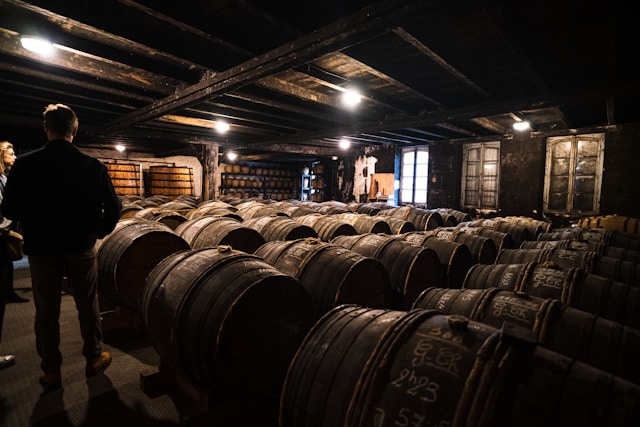
The cognac houses are Cognac's primary attraction. Each offers guided tours through aging cellars stacked floor-to-ceiling with oak barrels, distillation rooms housing copper pot stills, and blending rooms where master blenders create the house signature. Tours conclude with tastings—typically 2-3 cognacs ranging from VS (Very Special, aged minimum 2 years) to XO (Extra Old, aged minimum 10 years). Booking ahead is essential during summer (June-August) when tours fill rapidly; off-season (September-May) you can often walk in. All major houses offer English-language tours.
Hennessy (The Global Giant): Hennessy is the world's largest cognac producer, selling 50+ million bottles annually. Their tours are slick, professional, and genuinely informative—you cross the Charente river by boat to reach the aging warehouses, which alone makes it memorable. The standard "Hennessy Experience" tour lasts 90 minutes, costs €22, and includes tasting of VS and XO cognacs. Premium tours (€45-75) add vertical tastings or access to private reserves. Tours run hourly 10:00-17:00 daily April-October, reduced winter schedule November-March. Book online at hennessy.com minimum 48 hours ahead during peak season. Location: Quai Hennessy (riverside, 5-minute walk from Place François I).
Rémy Martin (Prestige & Tradition): Rémy Martin focuses exclusively on Cognac Fine Champagne—cognac made from grapes grown in the region's two highest-quality districts (Grande Champagne and Petite Champagne, referring to chalky soil, not the sparkling wine). Their tours emphasize terroir and traditional copper pot still distillation. The "Discovery Tour" (€25, 90 minutes) includes cellar visit and tasting of VSOP and XO. The "Prestige Tour" (€60, 2 hours) adds access to aging cellars dating to 1724 and tasting of Louis XIII (retail price €3,000+ per bottle—this alone justifies the tour cost). Tours run 10:00-17:00 daily April-October, weekdays only November-March. Book via remymartin.com. Location: 20 Rue de la Société Vinicole, 3km south of town center (taxi €8-10, or free shuttle from tourist office during summer).
Martell (The Oldest House): Founded 1715, Martell is Cognac's oldest major house. Their tours are less touristy than Hennessy, more intimate than Rémy Martin—you feel like you are visiting a working distillery rather than a visitor attraction. The cellars are magnificent: vaulted stone chambers holding 200,000+ barrels, the air thick with evaporating cognac. Standard tour €18, 75 minutes, includes VS and VSOP tasting. Tours run 10:00-17:00 daily April-September, weekends only October-March. Walk-ins usually accommodated off-season, summer booking advised. Location: Place Édouard Martell (riverside, 400m from Hennessy).
Courvoisier (Napoleon's Choice): Courvoisier built its reputation as "Le Cognac de Napoléon"—Napoleon supposedly took barrels of Courvoisier to Saint Helena during his exile. Their tours lean heavily into this imperial connection with period costumes and Napoleonic artifacts. Standard tour €20, 90 minutes, includes VS and VSOP tasting. Tours run 10:00-18:00 daily April-October. Location: Place du Château, opposite Château de Cognac. Book via courvoisier.com.
Realistic Tour Strategy: You can comfortably visit two cognac houses in one day—morning tour 10:00-11:30, lunch, afternoon tour 14:30-16:00. Attempting three tours becomes rushed and the tastings blur together. Choose two from different tiers: pair Hennessy (mass market excellence) with Rémy Martin (prestige), or Martell (tradition) with Courvoisier (Napoleon heritage). Each house offers distinct perspectives on the same fundamental process.
Exploring Old Town Cognac
Beyond the cognac houses, the medieval center deserves genuine exploration. Cognac's old town clusters around Place François I, named for King François I who was born here in 1494. The Renaissance Château de Cognac—his birthplace—now houses Courvoisier's headquarters but the exterior facade, with its elaborate stonework and turrets, remains visible from the square. The pedestrianized Rue Grande runs from Place François I toward the river, lined with half-timbered houses from the 15th-16th centuries. Many ground floors now house cognac boutiques selling bottles unavailable in UK supermarkets—older vintages, single-estate cognacs, limited releases. Prices are competitive with duty-free, and staff offer expert guidance if you are selecting gifts.
The riverside promenade along Quai de la Charente offers peaceful walking beneath plane trees, with views across to the cognac warehouses. Benches line the route—perfect for a mid-afternoon break if you have over-indulged in tastings. The public gardens (Jardin Public de l'Hôtel de Ville) occupy the site of a former Franciscan monastery, with manicured lawns, rose gardens, and shaded paths. Free entry, open sunrise to sunset.
The Saint-Léger church (13th-15th centuries) sits at the southern edge of the old town, notable for its Romanesque-Gothic transition architecture and 16th-century stained glass. Free entry, usually open 09:00-18:00 daily. The Musée des Arts du Cognac (€6 entry, closed Mondays) traces cognac production history through copper stills, vintage bottles, and cellar master tools—genuinely interesting if you are fascinated by the distillation process, skippable if your cognac house tours have satisfied your curiosity.
Where to Eat in Cognac
Cognac's restaurant scene centers on Charentais regional cuisine: river fish (pike, eel, lamprey), Marennes oysters from the Atlantic coast 80km west, Pineau des Charentes (fortified wine aperitif made from cognac and grape must), and dishes flambéed in cognac for theatrical effect. Most restaurants close Sunday evenings and Mondays—plan accordingly.
La Courtine (Traditional Charentais): Located in a 17th-century stone building on Rue du Rempart, La Courtine serves classic regional dishes executed with genuine care. The menu changes seasonally but expect options like pike-perch with Pineau sauce, confit duck with Cognac reduction, or entrecôte flambéed tableside in aged cognac. Lunch formula €22 (two courses), dinner à la carte €35-50. Reservations essential for dinner, walk-ins usually accommodated for lunch. Closed Sunday dinner and Monday. Address: 5 Rue du Rempart. This is where locals bring visiting relatives to showcase Cognac's food culture.
Les Foudres (Riverside Contemporary): Overlooking the Charente river, Les Foudres occupies a converted cognac warehouse with exposed stone walls and barrel-vaulted ceilings. The cooking is contemporary French with Charentais influences—think seared scallops with cognac beurre blanc, or guinea fowl with Pineau jus. The weekday lunch formula (€18.50, two courses) is exceptional value. Dinner à la carte €40-60. Riverside terrace open May-September. Reservations advised for dinner and weekend lunch. Closed Monday. Address: 41 Quai de la Charente.
Le Bistro de Claude (Casual Lunch): A straightforward bistro on Place François I serving reliable French standards—steak-frites, croque-monsieur, salads—at reasonable prices. Lunch formula €14.50, dinner à la carte €20-30. The terrace overlooks the square, perfect for people-watching between cognac house visits. No reservations, walk-in only, expect 10-15 minute wait during peak lunch (12:30-13:30). Open daily except Sunday evening. Address: 12 Place François I.
Coffee & Light Bites: Café du Musée (5 Rue Monseigneur Lacroix) serves excellent coffee and pastries, plus light lunch options (quiches, salads, sandwiches €8-12). Popular with locals, minimal English spoken. Open 08:00-19:00 Tuesday-Saturday, 09:00-18:00 Sunday, closed Monday.
Full-Day Cognac Itinerary from Poitiers
08:30 - Depart Poitiers: Leave early to maximize your day. The drive to Cognac takes 1h15; arriving before 10:00 gives you first pick of parking and ensures you make your first tour.
09:45 - Arrive Cognac, Park at Place François I: The central car park (€10 maximum daily rate) is 200m from all major cognac houses.
10:00 - First Cognac House Tour: Begin with Hennessy (boat crossing, professional tour) or Rémy Martin (if you have booked their Prestige experience). Tours last 90 minutes including tasting.
12:00 - Lunch: Either La Courtine (traditional) or Les Foudres (riverside contemporary). Book ahead if visiting Friday-Sunday. Budget 90 minutes for leisurely lunch.
13:30 - Old Town Walk: Stroll Rue Grande, visit François I birthplace square, walk riverside promenade. Allow 45 minutes for relaxed exploration.
14:30 - Second Cognac House Tour: Martell (intimate traditional cellars) or Courvoisier (Napoleon heritage). Another 90 minutes including tasting.
16:00 - Coffee & Shopping: Café du Musée for coffee, then browse cognac boutiques on Rue Grande for bottles to take home. Allow 45 minutes.
17:00 - Depart Cognac: Begin return journey to Poitiers. Arrive back 18:15-18:30, in time for evening dinner in Poitiers if desired.
Alternative Evening Option: Stay for dinner in Cognac (Les Foudres or La Courtine), depart 20:30-21:00, arrive Poitiers 22:00. This makes for a long but very satisfying day.
Combine Your Cognac Day Trip
Cognac sits strategically positioned for combining with other southwestern destinations. The town of Saintes lies just 35km west on the N141—15 minutes' drive—offering exceptional Roman ruins including a 1st-century amphitheater and the Arch of Germanicus. The Abbaye aux Dames, a magnificent Romanesque abbey now converted to a concert venue, is worth an hour's visit. If you have a full day, route Poitiers → Cognac morning tours → Saintes lunch and Roman sites → return to Poitiers via A10 works beautifully. See our La Rochelle guide for another major coastal destination 80km west of Cognac.
Jarnac, 15km east of Cognac, is a smaller cognac-producing town known for Courvoisier's original distillery and several boutique cognac houses offering more intimate tours than the big brands. Combine Cognac morning with Jarnac afternoon if you are truly passionate about spirits. The town of Rochefort (75km northwest, 1 hour drive) offers naval heritage museums and Fort Boyard boat trips—ambitious but possible as a two-center day trip if you start very early.
For a relaxed overnight trip, base yourself in Cognac (hotels €60-120/night) and explore the region over two days: Day 1 Cognac houses and old town, Day 2 Saintes Roman sites or La Rochelle coast. This allows evening meals in Cognac's restaurants and avoids rushed timings.
Practical Information & Tips
Best Time to Visit: May-June and September offer ideal conditions—warm weather, fewer crowds than July-August, and all cognac houses operating full schedules. July-August bring peak tourist numbers; tours fill rapidly and require advance booking 1-2 weeks ahead. October-April sees reduced tour schedules (weekends only at some houses) but quieter cellars and more intimate experiences. Avoid January when several houses close for annual maintenance. For seasonal planning across the Poitiers region, see our best time to visit Poitiers guide.
How Much to Budget: Realistic day trip costs for two people: fuel €20-25 return, péage tolls €16-20 return, parking €10, two cognac house tours €80-100, lunch €40-60, coffee/pastries €8-12, cognac purchases €40-100 (optional). Total: €170-240 for two, or €85-120 per person. Bringing packed lunch saves €40-60; visiting only one cognac house saves €40-50.
Driving After Tastings: Each cognac house tasting includes 2-3 measures (approximately 50ml total alcohol). UK drink-drive limit is 0.08% blood alcohol (80mg per 100ml blood); France's limit is 0.05% (50mg per 100ml). Two tastings plus lunch wine could exceed French limits. Strategy: designate one non-drinking driver, spit tastings rather than swallowing (tasting rooms provide spittoons), or allow 3-4 hours after final tasting before driving. Take this seriously—French police conduct random breath tests, and penalties for foreign drivers are severe (€135-750 fines, possible vehicle impoundment).
Buying Cognac to Take Home: UK customs allowances post-Brexit permit 4 litres of spirits per person duty-free when returning from EU. Cognac purchased in France is typically 15-30% cheaper than UK retail for equivalent bottles. Cognac houses sell current-production bottles; boutiques on Rue Grande stock older vintages and limited releases unavailable in UK. Packaging for transport: request bubble wrap from shops, pack bottles in center of suitcase surrounded by soft clothes. Check your airline's liquid allowances if packing in hand luggage (100ml maximum per container in carry-on).
Language: All major cognac houses offer English-language tours booked in advance. Town restaurants and shops have limited English; basic French phrases help significantly. Cognac sees enough international tourism that servers are patient with non-French speakers.
Photography: Most cognac houses permit photography in cellars but prohibit flash (damages aging cognac by heating barrels). Check with your guide before photographing. The riverside warehouses photograph beautifully in late afternoon light (16:00-18:00 May-August).
Final Advice: Cognac rewards visitors who approach it with genuine curiosity rather than tourist checklist mentality. The town is not Disneyland; it is a working production center that happens to welcome visitors. Take time to understand the process, ask questions during tours, and savor the town's unhurried atmosphere. Many British visitors initially choose Cognac as a "backup plan" if weather ruins coastal days—they invariably rate it among their trip highlights. For more Poitiers-area day trips, see our guides to things to do in Poitiers and complete Poitiers travel guide.
Photo de Timothé Durand sur Unsplash