Driving from Calais to Poitiers offers British visitors the freedom to explore France at their own pace—no train timetables, no luggage restrictions, no anxiety about missing connections. This 620km journey down France's western corridor takes you from Channel coast to medieval city in around six hours, connecting directly to the UK via frequent Dover-Calais ferries.
Whether you're planning a Futuroscope family holiday, touring the Loire Valley, or combining Poitiers with La Rochelle and the Atlantic coast, driving gives you flexibility that flights and trains simply cannot match. This guide covers everything: routes, costs, ferry options, French driving rules, and practical tips for UK motorists navigating French autoroutes for the first time.
Quick Navigation
Why Drive from Calais to Poitiers (vs Flying/Train)
Cost Comparison (Family of 4): Driving becomes increasingly economical as passenger numbers rise. For a family of four traveling in July-August peak season: Flying: £600-800 (flights London-Poitiers) + £80-120 (airport transfers/car hire) = £680-920 total. Train: £800-1,200 (Eurostar + TGV tickets) + luggage anxiety = £800-1,200 total. Driving: £76-119 (ferry Dover-Calais return) + £110-130 (fuel return) + £75-95 (péages return) = £260-345 total. The driving option saves £335-875 compared to flying and £455-855 compared to trains—a massive difference that increases further if you're traveling as a larger family or for longer stays.
Luggage Freedom: Airlines restrict you to 20-23kg checked bags plus hand luggage, charging £25-50 for extras. Trains tolerate more luggage but still limit you practically. Your car? Pack whatever fits. Bringing camping equipment for Lac de Saint-Cyr? Fine. Stocking up on French wine to bring home? Load the boot. Planning two weeks touring Loire châteaux and Atlantic beaches? Throw in extra clothing, beach equipment, children's toys, and anything else that makes family holidays comfortable. No weight limits, no fees, no stress about forgetting essentials.
Flexibility & Freedom: Flights lock you into fixed departure times with inflexible change fees (£50-150 typical). Trains demand punctuality and connection anxiety—miss the TGV and you've wasted £120+ per ticket. Driving? Leave when you want. Dover-Calais ferries run 30 times daily with multiple operators (P&O, DFDS, Irish Ferries), so if you miss your booked crossing, most operators allow you to catch the next available ferry at no extra cost. Running late after breakfast? No problem. Want to stop at Tours for lunch? Your schedule. Need to detour for pharmacy supplies? Five-minute diversion.
Day Trip Capability: Once in Poitiers, a car transforms your holiday. Futuroscope sits 10km north of city center—taxis cost €25-35/£21-29 each way, adding £168-203 per week for daily visits. With your own car? Free parking at all Futuroscope hotels. Want to visit Marais Poitevin (Green Venice)? Impossible without a car—the wetland village of Coulon lies 63km from Poitiers with no direct public transport. La Rochelle and Île de Ré? 130km, easily done as day trips. Loire châteaux (Chinon, Saumur, Fontevraud Abbey)? All within 50-80km. The car unlocks experiences that flights and trains simply cannot access.
When Driving Doesn't Work: Solo travelers or couples making short trips (2-3 days) often find flying cheaper—the per-person cost advantage diminishes. Business travelers prioritizing speed over economy should fly (2.5 hours London-Poitiers via Paris versus 8-9 hours driving door-to-door). Nervous drivers uncomfortable with right-hand-side traffic should reconsider. And if you're visiting Poitiers city center exclusively without Futuroscope or day trips, trains deliver you directly to the pedestrianized core without parking headaches. But for families, longer stays (1-2 weeks), or anyone wanting to explore beyond Poitiers itself, driving delivers unbeatable value and flexibility.
Route Overview: The A10 Autoroute Journey
The Quick Summary: Calais to Poitiers covers 620-625km (385-390 miles) via autoroutes (motorways), taking 6-6.5 hours non-stop. Add ferry crossing time (90 minutes Dover-Calais), check-in (arrive 60 minutes early minimum, 90 minutes in peak season), and rest stops (essential—plan 2-3 breaks), and you're looking at 8.5-9.5 hours total door-to-door. This makes it a full-day journey requiring early departure or overnight ferry options. Most families leave UK mid-morning (9-10am), catch midday ferry (12-1pm), and arrive Poitiers evening (8-9pm French time, 7-8pm UK time accounting for the one-hour timezone difference).
Two Main Route Options: You face a fundamental choice: Route 1 (Via Rouen, avoiding Paris): A16 Calais → Abbeville → A28 Rouen → Le Mans → Tours → A10 Poitiers. Distance 623km, time 6h15-6h30, péages €44-48/£37-40. This is the recommended route for most UK visitors—completely bypasses Paris congestion, scenic in sections (particularly A28 through Normandy countryside), and reliably traffic-free except July-August Saturdays. Route 2 (Via Paris): A1 Calais → Paris Périphérique (ring road) → A10 Poitiers. Distance similar (~620km), time 6h-6h15 in ideal conditions but easily 8-9 hours during Paris rush hours (7-9am, 5-7pm) or weekend getaway traffic. Péages €48-50/£40-42. Only choose this route if you want to stop in Paris for sightseeing or you're traveling deep into the night when the périphérique is empty (post-11pm).
Traffic Considerations: French autoroutes flow smoothly most of the year, but specific dates create chaos. Avoid if possible: July-August Saturdays (especially first Saturday of August, known as "Black Saturday"—the A10 between Paris and Tours can see 10+ hour delays as half of Paris vacates to Atlantic coast), the Saturday before and after major public holidays, and the final weekend of August (la rentrée when families return from holidays). The A10 through Tours represents the journey's primary bottleneck—this is where Brittany, Loire Valley, and Bordeaux-bound traffic converges. Expect delays here on any summer weekend.
Best Travel Times: Mid-week (Tuesday-Thursday) in any season flows smoothly. Sundays see far less traffic than Saturdays—heavy goods vehicles (HGVs/lorries) are banned from French roads all day Sunday, dramatically reducing traffic volume. Early morning departures (leaving Calais by 7-8am) beat the rush. Late evening arrivals work well—French autoroutes have excellent lighting and signage, making night driving straightforward. Winter months (November-February) see minimal traffic but bring earlier darkness (sunset 5-5:30pm) and occasional weather disruptions.
Satnav Settings: Set your GPS to "avoid toll roads" only if you have unlimited time and patience—the toll-free alternative adds 2-3 hours and navigates through countless roundabouts and village centers. The €44-48 péage cost is worth every centime for stress reduction and time saving. Use Waze app if you have French mobile data (or UK roaming)—it provides real-time traffic alerts, police warnings, and accident notifications that built-in car satnavs miss. Google Maps works adequately offline if downloaded in advance. Disable speed camera warnings if your satnav includes them—French law prohibits devices that alert drivers to camera locations, with fines reaching €1,500.
Ferry Connections to Calais
Dover-Calais: The Primary Route: This is Europe's busiest ferry crossing and your most likely option. Three operators run 30 daily crossings between them: P&O Ferries (10 sailings daily, 90 minutes crossing, occasionally 30 minutes on fast craft Spirit of Britain/Spirit of France), DFDS (11 sailings daily, 100 minutes crossing), and Irish Ferries (9 sailings daily, 90 minutes crossing). Ferries depart from early morning (first sailing around 12:15am) through late night (last sailing around 11:45pm), providing exceptional flexibility. You can typically find a crossing every 60-90 minutes throughout the day.
Pricing Strategy: Ferry prices vary dramatically by booking timing, season, and operator. Advance bookings (4-8 weeks ahead): £76-95/€90-110 for car + up to 9 passengers return, sometimes dropping to £65/€75 in promotional periods (typically January-February, November). Standard bookings (1-2 weeks ahead): £95-119/€110-140 return. Peak season advance (July-August, booked 8-12 weeks early): £140-180/€165-210 return. Last-minute/same-day: £180-250/€210-290 return, occasionally higher during peak demand. Book online directly with operators (often cheapest) or comparison sites like AFerry or DirectFerries. Most operators offer flexi-tickets (£15-25/€18-29 extra) allowing date changes—worth it if your plans might shift.
Check-In Times & Process: Arrive at Dover port minimum 60 minutes before departure; 90 minutes recommended during peak season (July-August, school holidays) to account for queues at check-in and border control. The process: follow signs to ferry port (not Channel Tunnel—they're separate facilities), enter Check-in lanes specific to your operator (P&O/DFDS/Irish Ferries clearly signed), present booking confirmation (paper or smartphone) + passports at booth, proceed through UK exit border control (passport check), drive to assigned lane, wait for boarding call (typically 20-30 minutes before departure), drive onto ferry following marshals' instructions. Total time from port entrance to ship departure: 45-75 minutes. Post-Brexit, UK Border Force scrutinizes passports more carefully—allow extra time.
Onboard Experience: All operators offer similar facilities: indoor seating (reclining seats and restaurant-style tables), outdoor decks (weather permitting), cafés/restaurants (£6-12/€7-14 for hot meals, £3-5/€3.50-6 for sandwiches/snacks), bars (pints £5-6/€6-7), shops (duty-free remains after Brexit, with savings on alcohol and tobacco), children's play areas, and free WiFi (patchy at sea). P&O and DFDS provide reserved seating options in Club Lounges (£12-18/€14-21 extra) for quieter environment. The 90-100 minute crossing passes quickly—use it for bathroom breaks, hot drinks, and mentally preparing for right-hand driving.
Alternative: Portsmouth-Caen (Overnight Option): Brittany Ferries operates overnight crossings Portsmouth-Caen (Ouistreham), departing Portsmouth around 11pm, arriving Caen 7am next morning. Crossing time: 5h45-6h30. This overnight option means you sleep through the Channel crossing (cabins €80-180/£68-152 for 2-4 berth depending on season) and wake in France ready to drive. From Caen to Poitiers: 350km, 3h30 via A28-A10, péages ~€30/£25. Total Portsmouth-Poitiers: 4-4.5 hours driving post-ferry versus 6+ hours from Calais. This works brilliantly if you live in southern/western England (Bristol, Southampton, Exeter, South Wales) or want to avoid the long Calais-Poitiers drive. Ferry costs run higher (£180-280/€210-330 return for car + passengers, plus cabin), but you save 2-2.5 hours driving and arrive refreshed rather than exhausted from 8+ hours behind the wheel.
Eurotunnel (Channel Tunnel) Alternative: Le Shuttle trains (Eurotunnel) run Folkestone-Calais in 35 minutes, departing up to 4 times hourly at peak times. You drive onto the train, stay in your car, and drive off in France—no need to disembark. Check-in closes 40 minutes before departure (stricter than ferries). Prices similar to ferries (£70-220/€80-260 return depending on booking timing and season). The 35-minute crossing beats ferries by an hour, but you sacrifice the chance to stretch legs, use proper toilets, and grab hot food/drinks. Many UK motorists prefer ferries for the psychological break between UK and French driving. Choose Eurotunnel if speed is paramount or weather is severe (ferries cancel in storms; trains run regardless).
Complete Route Guide
Calais Port to A16 Autoroute (5km, 5-10 minutes): Exit Calais ferry terminal following "Toutes Directions" (All Directions) signs. The port feeds directly onto roads leading to the A16 motorway entrance. Critical for UK drivers: you must now drive on the RIGHT side of the road—the moment you leave the port, traffic switches. Take a deep breath, stay alert, and remember: driver sits in the center of the road (so if you're driving UK right-hand-drive car, you're now on the road's right edge). Follow "A16 Boulogne/Paris" signs. The A16 begins immediately—you'll hit your first péage booth within 10km.
A16: Calais to Abbeville (85km, 50 minutes): The A16 runs southeast through Pas-de-Calais, bypassing Boulogne-sur-Mer. This section is free (no tolls) for the first 25km, then tolled from Boulogne onward. Speed limit: 130 km/h (81 mph) dry conditions, reducing to 110 km/h (68 mph) in rain (yes, even light rain—French speed limits drop automatically when wet). The A16 is generally quiet except during UK school holiday exodus periods. Stay in right lane except when overtaking—French drivers flash headlights aggressively if you're blocking the fast lane. First péage payment typically occurs around Abbeville exit (€4-6/£3.40-5 for cars).
A28: Abbeville to Rouen to Le Mans to Tours (335km, 3 hours): At Abbeville, the A16 becomes A28—just stay on the motorway, following "Rouen/Le Mans/Tours" signs. This is France's newest major autoroute (opened 2005-2010), beautifully engineered through Normandy countryside with gentle curves and excellent surfaces. The A28 is significantly quieter than the A10—you'll often drive for minutes seeing no other vehicles, particularly on weekdays. Rouen bypass (50km from Abbeville): The A28 circles south of Rouen—follow "Le Mans/Tours" signs to avoid entering the city. Le Mans (180km from Abbeville): The A28 bypasses Le Mans to the west—again, follow "Tours" signs. This is your halfway point time-wise; consider stopping at Aire du Mans rest area for fuel/toilets/coffee. Tours approach (100km from Le Mans): The A28 feeds onto the A10 just north of Tours—follow "Poitiers/Bordeaux" signs at the junction. Péages on the A28: expect 2-3 toll booths totaling €18-22/£15-19.
A10: Tours to Poitiers (100km, 1 hour): The A10 is France's busiest north-south autoroute, carrying traffic from Paris to Bordeaux and the Spanish border. The Tours-Poitiers section sees moderate traffic year-round, heavy traffic summer weekends. Speed limit: 130 km/h dry, 110 km/h wet, occasionally dropping to 90 km/h in work zones (always clearly signed). The A10 runs arrow-straight through flat countryside—monotonous but fast. You'll pass Châtellerault (50km south of Tours), then Futuroscope appears on signs. Exit for Futuroscope: Junction 28 "Futuroscope" is clearly marked 10km before the exit—stay alert as you approach Poitiers. Exit for Poitiers city center: Junction 29 "Poitiers Centre" or Junction 30 "Poitiers Sud" depending on your accommodation location (check hotel address beforehand). Péages on Tours-Poitiers A10: €10-12/£8.50-10 at the toll booth just before Poitiers exit.
Final Approach: A10 to Poitiers (5-15 minutes): Exit the A10 at your chosen junction. Futuroscope hotels: take Junction 28, then follow "Futuroscope/Hotels" signs (very well signposted—the theme park generates massive traffic). Poitiers city center: take Junction 29 "Poitiers Centre," then follow signs to "Centre Ville." The final approach navigates through standard French roundabouts (priorité à droite unless otherwise marked—vehicles already on the roundabout have priority). Your GPS should handle this easily, but keep eyes open for pedestrianized zones in Poitiers city center—several streets are closed to cars.
Alternative Route Via Paris (Not Recommended): If you choose the Paris route: A16 Calais → A1 → Paris Périphérique Extérieur (Outer Ring Road, clockwise around city) → Exit toward "Bordeaux A10" → A10 to Poitiers. The périphérique terrifies many drivers—it's 35km of six-lane mayhem with short merging lanes, aggressive drivers, and minimal signage gaps. Speed limit 70 km/h (43 mph) but traffic often flows at 90+ km/h or crawls at 10 km/h during rush hours. Only use this route if you're confident navigating urban French motorways or traveling late night (post-11pm) when the ring road empties. Péages via Paris run €48-50/£40-42 total, slightly higher than the Rouen route.
Péage Costs & Payment
Total Péage Cost Calais-Poitiers: €44-48/£37-40 one-way via the recommended A16/A28/A10 route avoiding Paris. Return journey doubles this to €88-96/£74-81. Péages (tolls) vary slightly by exact route taken, time of day (very minor variations), and vehicle class. The figures above assume "Class 1" vehicles—standard cars, vans, and motorhomes under 2 meters height. Motorcycles pay half price. Caravans, campers, and vans over 2m pay Class 2 rates (approximately 50% more). HGVs/trucks pay Class 4 rates (roughly triple). The Paris route costs €48-50/£40-42 one-way due to higher péages on the A1 and Paris périphérique sections.
How French Péages Work: Unlike UK toll roads (Dartford Crossing, M6 Toll) which charge once, French autoroutes use a barrier system. Step 1 - Take Ticket: At motorway entrance, stop at the péage booth, press the button or take the ticket from the machine (some booths auto-issue tickets). This ticket records where you joined the motorway. Keep it safe—you need it to exit. Step 2 - Drive: Enjoy toll-free driving until you exit the motorway or reach a toll payment point (usually when leaving the autoroute or at major junctions). Step 3 - Pay at Exit: Insert ticket into payment machine, display shows amount owed, pay by card or cash, barrier lifts. Most UK-issued credit/debit cards work fine in French toll machines (chip-and-PIN standard), though contactless sometimes fails—bring your card, not just phone payment.
Payment Lane Types: Péage booths display symbols indicating accepted payment methods: Green Arrow (Télépéage): Reserved for vehicles with electronic toll tags (French badge-holders). Do NOT use these lanes unless you have a télépéage subscription—the barrier won't open and you'll block traffic, causing much horn-honking frustration. Orange "t" Symbol: Accepts both télépéage tags AND cards/cash. This is your safest choice—it accommodates all payment types and usually has shorter queues than card-only lanes. Blue Credit Card Symbol: Accepts credit/debit cards only, no cash. Fast option if you're paying by card. Coin/Note Symbol: Cash only. Bring euros—toll machines accept €5, €10, €20, €50 notes and all euro coins. Change is given. Some machines jam with €50+ notes; use smaller denominations where possible.
Common Péage Frustrations & Solutions: Card Declined: Happens occasionally with UK cards. Try inserting card slower, ensuring chip faces correct direction (machine usually shows diagram). If repeated failure, switch to cash lane. Some machines prefer debit over credit cards. Lost Ticket: If you lose your péage ticket, tell the booth attendant "J'ai perdu mon ticket" (I lost my ticket). They'll charge you the maximum possible toll for that section—expensive penalty (can be €20-40). Keep that ticket safe. Wrong Lane: Accidentally entered télépéage-only lane? Press the red assistance button, explain "Je n'ai pas de badge" (I don't have a tag), attendant will open barrier manually or direct you backward to correct lane. Don't panic—happens constantly to tourists. No Change: Some cash-only machines run out of change during busy periods. Use the intercom button to request assistance or switch to card lane.
Should You Get a Télépéage Tag?: Several companies (Sanef Tolling, Bip&Go, UTA) offer prepaid electronic toll tags for foreign visitors. You mount the tag on your windscreen, drive through télépéage lanes without stopping, and tolls automatically deduct from your prepaid account. Sounds convenient, but: tags cost €10-20 rental fee plus €20-30 minimum top-up, only worthwhile if you're doing extensive French motorway driving (multiple trips, longer distances), registration requires uploading documents (driving licence, vehicle registration), and you must remember to remove/return tag to avoid ongoing charges. For a one-off Calais-Poitiers trip, standard card/cash payment is simpler and avoids administrative hassle.
Free Alternative Routes (Not Recommended): French N-roads (N10, N147) parallel the autoroutes and charge no tolls. The Calais-Poitiers journey via N-roads takes 8-10 hours instead of 6, navigates through countless town centers and roundabouts, and saves only €44-48. Unless you have unlimited time and patience, pay the péages—they're worth every euro for stress reduction, time-saving, and safer driving on limited-access motorways versus busy N-roads shared with tractors and cyclists.
Fuel Costs & Petrol Stations
Total Fuel Cost Calais-Poitiers: €75-90/£63-76 one-way for an average family car (diesel), or €85-100/£72-84 for petrol. Return journey doubles to €150-180/£126-152 diesel or €170-200/£143-169 petrol. These estimates assume: 620km distance, diesel consumption 7 L/100km (40 mpg UK), petrol consumption 7.5 L/100km (37 mpg UK), fuel prices €1.75/L diesel or €1.78/L petrol (March 2026 averages). Your actual costs vary by vehicle efficiency—a modern small diesel (Peugeot 308, VW Golf TDI) might achieve 5.5-6 L/100km (47-51 mpg), reducing fuel cost to €60-70/£51-59 one-way. Large SUVs or older petrol cars (9-10 L/100km / 28-31 mpg) can hit €100-110/£84-93 one-way.
French Fuel Prices (March 2026): Diesel (Gazole): €1.70-1.95 per liter depending on location and station type. Average €1.75/L. Petrol SP95 (equivalent to UK E10): €1.76-1.80 per liter, average €1.78/L. Petrol SP98 (premium unleaded): €1.88-1.95 per liter. Why so expensive? French fuel taxes account for ~50% of pump prices—significantly higher than UK where taxes represent ~40%. France also experienced sharp price increases in early 2026 due to diesel shortages and global oil market fluctuations. Some service stations charged over €2/L in March 2026 (Deux-Sèvres region saw one station at €2.90/L—extreme outlier). Compared to UK prices (£1.45-1.55/L or €1.70-1.82/L at March 2026 exchange rates), French fuel costs roughly the same or slightly more.
Where to Buy Fuel (Price Strategy): Supermarket petrol stations (Cheapest): Leclerc, Carrefour, Intermarché, and Auchan supermarkets operate petrol stations typically €0.05-0.10/L cheaper than branded stations. If you're stopping for lunch or bathroom break, look for supermarkets on the outskirts of towns—the fuel station is usually visible from the N-road. Leclerc is particularly known for low fuel prices. Autoroute service areas (Most Expensive): Total, Esso, Shell, and BP stations at motorway aires charge premium prices—€0.15-0.25/L more than supermarkets, sometimes reaching €2.10-2.20/L. Only use these in emergencies or if you're running critically low. Town center stations (Mid-Price): Independent stations and brand stations in towns charge between supermarket and autoroute prices. Adequate if you're already in town but not worth detouring for.
Recommended Fuel Strategy Calais-Poitiers: Before Boarding Ferry (UK): Fill your tank before reaching Dover. UK fuel prices are marginally cheaper than French prices, and you'll start the French journey with a full tank. French Fuel Stop Timing: Your tank range determines stops, but plan for one refuel en route. Ideal location: Le Mans area (300km from Calais, 320km from Poitiers)—you're roughly halfway, and Le Mans has multiple supermarket options just off the A28. Exit at "Le Mans Centre" or use Aire du Mans service area (autoroute station, expensive but convenient). Avoid Running Low: Don't let your tank drop below quarter-full—French service stations can be spaced 30-50km apart on some N-roads, and the stress of searching for fuel while worried about running dry ruins holidays.
Fuel Station Quirks for UK Visitors: Self-Service Pumps: Most French stations are self-service (libre-service). Lift nozzle, select fuel type (Gazole = diesel, SP95 = standard unleaded, SP98 = premium), pump fuel, replace nozzle, go inside to pay. Some stations require you to tell the cashier your pump number ("Pompe numéro cinq, s'il vous plaît" = Pump number five, please) before pumping—this pre-authorization prevents drive-offs. Card Payment at Pump: Many modern stations accept card payment directly at the pump—insert card, select fuel, pump, remove card. UK chip-and-PIN cards work reliably. French cards use slightly different technology; if your card is declined at the pump, go inside to pay the cashier. 24-Hour Unmanned Stations: Increasingly common, especially at supermarkets. These accept cards only (no cash) and operate 24/7. Useful for late-night fill-ups but frustrating if your UK card doesn't work (technology compatibility varies).
Fuel Efficiency Tips: Driving at 70 mph (112 km/h) instead of 80 mph (129 km/h) reduces average fuel consumption by 15%—that's €11-15/£9-13 saved on the Calais-Poitiers journey. Cruise control on French autoroutes maintains steady speeds, maximizing efficiency. Remove roof racks and boxes if not needed—they increase drag substantially. Avoid rapid acceleration and harsh braking—smooth driving saves fuel. Check tire pressures before departure—underinflated tires reduce fuel economy by 3-5%.
Rest Stops & Services
Why Rest Stops Matter: Driving 620km (6+ hours) without breaks is dangerous, illegal (French law requires 15-minute break every 2 hours), and miserable. Fatigue kills—motorway accidents spike after 3+ hours continuous driving. Plan for 2-3 rest stops: one around 2 hours (Abbeville area, 100km from Calais), one at halfway (Le Mans area, 300km), and optional third stop approaching Poitiers if children are restless or you need caffeine boost. Each stop adds 15-30 minutes to journey time, but you'll arrive safer and saner.
Types of French Motorway Rest Facilities: Aires de Service (Full Service Areas): These major rest stops occur every 40-60km on autoroutes, offering fuel stations, restaurants/cafés, WCs (toilets), parking for cars and trucks, sometimes shops, and occasionally playgrounds for children. Names like "Aire de [Town Name]" indicate these facilities. Most are operated by major brands (Total, Shell, Esso) charging premium prices for fuel (€0.20-0.25/L more than supermarkets) and food (€8-12 for basic hot meal, €4-5 for coffee). Toilets are usually clean and free, occasionally requiring €0.50-1 coin. Aires de Repos (Basic Rest Areas): Smaller facilities every 15-20km offering parking and toilets only—no fuel, no food beyond vending machines. Adequate for quick bathroom breaks and leg stretches. Toilets vary from modern and clean to questionable and best avoided—carry tissues/toilet paper as insurance.
Recommended Rest Stop 1 - Aire de Baie de Somme (A16 near Abbeville, 100km from Calais): Modern service area with Total fuel station, Subway restaurant, Brioche Dorée café, clean WCs, and short walking paths for stretching legs. Good for coffee and bathroom break approximately 1 hour into journey. Not the cheapest for fuel, but convenient for quick 15-minute stop. Alternative: Exit A16 at Abbeville, visit town center supermarket (Leclerc) for cheaper fuel and better food options—adds 20 minutes but saves money.
Recommended Rest Stop 2 - Aire du Mans (A28 near Le Mans, 300km from Calais): One of France's better motorway service areas, operated by Total. Full facilities: fuel (expensive but necessary if running low), Paul café/bakery (decent coffee and sandwiches), proper sit-down restaurant (€10-14 for hot meals), clean modern WCs, children's playground, picnic areas with tables, and Relay news shop. This is your ideal halfway stop—arrive here around 3 hours into journey, stretch legs for 20-30 minutes, grab lunch or snacks, use toilets, let children burn energy on playground. Alternative: Exit A28 at "Le Mans Centre," visit Leclerc or Carrefour supermarket 5 minutes off motorway—much cheaper fuel and food, but adds 25-30 minutes total with detour and supermarket parking.
Recommended Rest Stop 3 - Aire de Poitou-Charentes (A10 between Tours and Poitiers, 520km from Calais): Final major service area before Poitiers, offering Esso fuel station, café/restaurant, WCs, and parking. Useful if children need final bathroom break before arrival or you want to tidy up before checking into hotel. This is your last chance for motorway facilities before exiting at Poitiers—next WCs require navigating local roads. Alternative: Skip this stop if everyone's comfortable and push through final 100km (1 hour) to Poitiers destination.
Toilet Realities (Managing Expectations): French motorway toilets vary wildly. Modern aires (Aire du Mans, major Total/Shell stations): Clean, well-lit, free, regularly serviced, with proper sit-down toilets and wash basins. British standards or better. Older aires and basic rest areas: Sometimes questionable hygiene, occasionally squat toilets (holes in floor—yes, still exist in France), unpredictable toilet paper availability, and mysterious smells. Strategy: Carry tissues/toilet paper, hand sanitizer, and low expectations. Use modern service areas when possible. If desperate, fast-food restaurants (McDonald's at motorway exits) offer reliably clean toilets though you're expected to buy something.
Food Options at Motorway Services: Don't expect British service station quality—French motorway food is generally inferior to UK offerings (yes, surprisingly). Cafés (Paul, Brioche Dorée): Offer coffee (€2.50-3.50), croissants/pastries (€1.50-3), sandwiches (€4.50-6.50). Adequate for quick caffeine and snacks. Restaurants: Hot meals (€10-14) of variable quality—think airline food, not gastronomy. Pizza, pasta, steak-frites dominate menus. Better Strategy: Pack a cooler with UK supermarket sandwiches, snacks, fruit, and drinks. French service stations charge €2-3 for bottled water that costs €0.50 at UK Tesco. Bring your own supplies and save €20-30 for family snacks, using motorway stops purely for toilets and leg stretches.
Picnic Areas: Most aires de service include outdoor picnic areas with tables and benches. If weather permits (spring through autumn), these offer pleasant lunch spots infinitely superior to overpriced service station restaurants. Many French families picnic at these tables with proper plates, glasses, and baguettes—the French travel with style. You can too: pack baguette, cheese, fruit, and wine (driver abstains!) from Calais supermarket for civilized roadside lunch. Much cheaper and more enjoyable than €12 motorway pizza.
Driving in France for UK Visitors
The Fundamental Shift: Right-Hand Driving: This is your biggest challenge. You must drive on the RIGHT side of the road—the opposite of UK driving. The moment you leave Calais port, traffic switches. Your instincts will scream to drive on the left; override them consciously for the first hour until muscle memory adapts. Critical moments requiring extra vigilance: leaving parking areas, roundabouts (enter from right, circulate anticlockwise—opposite of UK), T-junctions (especially turning from side roads onto main roads), and early morning when you're tired. Mental trick: "The driver sits in the center of the road"—if you're in a UK right-hand-drive car, you should now sit on the right edge of the French road (not the center, as you would in UK). This positioning cues correct lane placement.
Speed Limits: Motorways (Autoroutes): 130 km/h (81 mph) in dry conditions, 110 km/h (68 mph) in wet conditions. Yes, even light rain reduces the limit—this is automatic and applies nationwide, even if no signs indicate the reduction. Drivers with less than 3 years' license experience: 110 km/h (68 mph) maximum regardless of conditions. Dual Carriageways: 110 km/h (68 mph) dry, 100 km/h (62 mph) wet. Single-Carriageway N-roads: 80 km/h (50 mph) unless signs indicate 90 km/h (some departments increased limits since 2019). Towns/Built-Up Areas: 50 km/h (31 mph) from the moment you see the white sign with town name until you see the same sign with diagonal red line (town exit). Visibility Under 50 Meters (Fog/Heavy Rain): 50 km/h on all roads. Penalties: Speeding fines range from €135 (10-20 km/h over limit) to €1,500 (50+ km/h over, plus vehicle confiscation possible). French speed cameras are everywhere and unmanned—tickets arrive at your UK address weeks later. Pay them; ignoring doesn't work post-Brexit.
Alcohol Limits (Lower Than UK): France allows 0.5 g/L blood alcohol content versus UK's 0.8 g/L (Scotland 0.5 g/L). Rough translation: two small glasses of wine or one pint of beer puts most adults near or over the French limit. Drivers with less than 3 years' experience face 0.2 g/L limit—essentially zero tolerance. Penalties for driving over limit: €135 fine minimum, rising to €4,500 and 2-year license suspension for serious violations, plus vehicle confiscation possible. Strategy: Designated driver abstains completely. Even "just one drink" risks expensive consequences. French police conduct random breathalyzer checks, particularly on major routes during holiday periods and Sunday evenings when weekend tourists return home.
Documents Required (Keep in Car at All Times): Mandatory: Full UK driving license (photocard + paper counterpart if you still have old-style license), passport or national ID card (proof of identity), V5C vehicle registration certificate (logbook), insurance certificate showing minimum third-party cover. Highly Recommended: Insurance green card (post-Brexit documentation proving your UK insurance covers France—request from your UK insurer free of charge), European Health Insurance Card (EHIC) or replacement UK Global Health Insurance Card (GHIC) for medical emergencies, breakdown cover documents if you have European cover. Fine for Missing Documents: €135-750 depending on document. French police can conduct random document checks; keep everything in the glove box.
Equipment Mandatory in Vehicle: Warning Triangle: Reflective warning triangle must be carried at all times. If you break down, place triangle 30 meters behind vehicle to warn approaching traffic. Hi-Vis Jacket(s): At least one reflective jacket/vest must be kept INSIDE the passenger compartment (not in boot/trunk)—you must don it before exiting the vehicle after breakdown/accident. Technically, one jacket per passenger, though enforcement focuses on driver. UK police don't require these; buy them at French service stations (€3-5) or UK Halfords/Amazon (£5-8 for twin-pack) before departure. Headlamp Beam Deflectors: UK right-hand-drive cars have headlamp beams angled to illuminate the left side of UK roads. In France, this dazzles oncoming drivers. You must apply beam deflectors (adhesive stickers) to redirect light rightward. Modern LED/matrix headlamps often don't require deflectors (check your car's manual); older halogen headlamps always do. Buy deflectors at UK Halfords, Tesco, or Sainsbury's (£5-8) or French service stations (€8-12). Incorrect headlamps: €90 fine. UK Sticker: Vehicles registered in UK must display "UK" identifier (oval white sticker with black UK letters or integrated into number plate). GB stickers became invalid post-Brexit; you need UK specifically. Buy at UK motoring stores or French service stations if forgotten. Fine for missing: €135.
Roundabouts (Priorité à Droite): French roundabouts operate opposite to UK: you enter from the RIGHT and circulate COUNTER-CLOCKWISE (anticlockwise). Priority usually goes to traffic already on the roundabout, but some older rural roundabouts maintain "priorité à droite" (priority to the right), meaning vehicles entering the roundabout have priority over those already circulating—madness, but legally enforced. Look for signs: a roundabout sign with red triangle = standard priority (traffic on roundabout has priority, like UK). No sign or "Vous n'avez pas la priorité" = priorité à droite applies (yield to entering traffic). Urban roundabouts usually follow standard priority; rural roundabouts sometimes don't. Approach all roundabouts cautiously until you determine priority.
Overtaking Rules: Overtake on the LEFT only (same as UK, but feels counterintuitive when you're driving on the right). Never overtake on the right on motorways—it's illegal and dangerous. French drivers flash headlights aggressively if you're blocking the left lane; move right when safe to do so. On two-lane roads, broken white lines indicate overtaking permitted; solid white lines prohibit overtaking (same as UK). French drivers overtake more assertively than UK drivers—don't be surprised by sudden maneuvers.
Mobile Phone Use (Strict Prohibition): Using a handheld mobile phone while driving is illegal in France—no calls, no texting, no checking GPS. This includes when stationary in traffic or at red lights. Hands-free systems are also discouraged (though technically legal). Using headphones or earbuds while driving is explicitly prohibited. Penalties: €135 fine + 3 points on license. Police enforce this strictly, particularly in urban areas. Mount your phone securely for GPS navigation before starting the engine; don't touch it while driving.
Speed Camera Detectors (Illegal, €1,500 Fine): Devices that detect or warn of speed camera locations are prohibited in France. This includes: dedicated speed camera detectors, satnav systems with camera alerts enabled, apps like Waze when displaying camera locations (Waze now shows "danger zones" instead, which is technically legal). Critical: Disable speed camera warnings on your satnav or phone GPS app before entering France. The €1,500 fine for camera detectors is one of France's harshest traffic penalties, and police can confiscate the device. Waze legally operates in France by warning of "danger zones" rather than specific cameras—use this compromise.
Crit'Air Stickers (Low Emission Zones): If you're driving into major French cities (Paris, Lyon, Marseille, Grenoble, Strasbourg—150,000+ population), you need a Crit'Air sticker (Air Quality Certificate) displayed on your windscreen. These color-coded stickers (€3-4/£2.50-3.40 from certificat-air.gouv.fr) indicate your vehicle's emissions category. Poitiers currently does NOT require Crit'Air stickers (population ~90,000). You only need this if detouring through major cities en route. If driving straight Calais-Poitiers via the recommended A28 route, you can skip Crit'Air entirely. If routing via Paris, you technically need Crit'Air for the périphérique, though enforcement on through-traffic is minimal. Order Crit'Air 4-6 weeks before travel if planning urban detours; it's mailed to your UK address.
Practical Information
Best Times to Travel (Avoiding Chaos): Ideal Days: Tuesday-Thursday any time of year flows smoothly. Sundays see dramatically less traffic than Saturdays (HGVs banned all day). Early morning departures (Dover ferry 6-8am) beat rush-hour traffic everywhere. Avoid: July-August Saturdays (especially first Saturday August—"Black Saturday"), the Saturday before/after major French holidays (July 14 Bastille Day, August 15 Assumption, November 1 All Saints), final weekend August (la rentrée when families return from holidays), Friday late afternoons (4-7pm) on any autoroute near major cities. Seasonal Considerations: May-June and September offer best weather/traffic balance. April-October provides daylight until 8-9pm, making evening arrivals comfortable. November-February brings early darkness (sunset 5-5:30pm) but minimal traffic—good for budget travelers not afraid of winter driving. December 19-January 4 sees moderate traffic (French Christmas holidays but less intense than summer). School holiday periods (check French calendar: February break, April break, July 4-September 1, October 17-November 2) increase traffic moderately but nothing compared to British August bank holiday chaos.
Parking in Poitiers: City Center Parking: Multi-story car parks (parkings) charge €1.50-2.50/£1.30-2.10 per hour, typically with daily maximum €10-15/£8.50-13. Main car parks: Parking Notre-Dame (beneath Place Charles de Gaulle, 500m from cathedral), Parking Hôtel de Ville (town hall), Parking Carnot (near train station). Street parking (on-street meters) costs €1.50-2/£1.30-1.70 per hour, limited to 2-4 hours during business hours (9am-7pm Monday-Saturday). Sundays and evenings (post-7pm) usually free. Some zones are resident-only; check signs carefully. Hotel Parking: City center hotels often charge €10-18/£8.50-15 per night for parking or direct you to nearby public car parks. Book parking in advance if staying central—spaces are limited. Park+Ride: Poitiers operates P+R facilities on city outskirts with free bus connections to center, though these primarily serve commuters rather than tourists. Futuroscope Hotel Parking: All Futuroscope official hotels (onsite hotels within the park complex) offer free parking—a major advantage of driving. You park outside your hotel, walk 2-5 minutes to park entrance, and leave your car untouched for your entire stay. This is one of driving's biggest benefits: no daily taxi costs (€25-35/£21-29 each way from Poitiers city center).
Insurance & Breakdown Cover: Your UK car insurance provides minimum third-party cover in France (legal requirement since Brexit), but you should request a Green Card from your insurer (free document proving your insurance is valid in France). Carry this with your insurance certificate. Your UK breakdown cover (AA, RAC, Green Flag) may or may not include European cover—check your policy and upgrade if needed (typically £30-80/€35-95 for annual European add-on). Without European breakdown cover, a single callout in France can cost €200-500/£169-422. If you break down on a French motorway: pull onto hard shoulder (bande d'arrêt d'urgence), turn on hazard lights, don hi-vis jacket BEFORE exiting vehicle, exit vehicle on passenger side (away from traffic), stand behind crash barrier, call your UK breakdown provider or use French emergency roadside assistance phones (orange SOS boxes every 2km on autoroutes—press button for free automatic connection to highway patrol).
What to Pack for the Drive: Essential: Warning triangle, hi-vis jacket(s), headlamp beam deflectors, UK sticker, driving documents (license, passport, V5C, insurance certificate + green card), phone car charger (for GPS navigation), sunglasses (French sun is intense, especially summer), snacks and drinks (avoid overpriced motorway services), hand sanitizer and tissues (toilet insurance), basic first-aid kit, any prescription medications. Useful: Printed directions or offline maps as backup (mobile signal occasionally drops in rural France), euros cash (€50-100 for tolls and emergencies—some péage machines malfunction, requiring cash payment), UK adapters for charging devices (car uses UK socket, French hotel rooms use EU sockets), cooler with ice packs (keeping drinks cold and food fresh), children's entertainment (tablets, books, games—six hours is a long time for kids), audiobooks or podcasts (keep driver alert and entertained). Optional: Breakdown cover documents if you have European cover, Crit'Air sticker if detouring through major cities, European Health Insurance Card (EHIC) or UK Global Health Insurance Card (GHIC), car window sunshades (keep children comfortable in summer heat).
Mobile Phone Data & Navigation: UK Roaming in France (Post-Brexit): Most UK mobile operators (EE, Vodafone, Three, O2) include France in their roaming bundles, meaning your UK data allowance works in France at no extra cost—check your specific plan. Some budget operators (giffgaff, Smarty) charge extra for EU roaming post-Brexit or limit data to small amounts (3-5GB). Verify before departure. Navigation Apps: Google Maps works well offline if you download France map before leaving UK (Settings → Offline Maps → select France). Waze provides better real-time traffic data but requires constant mobile connection. Apple Maps works adequately. Your car's built-in satnav should handle French navigation, though map updates may be outdated (update before departure if possible). Data Usage: GPS navigation uses minimal data (1-2MB per hour with Google Maps). Streaming music uses substantially more (40-60MB per hour). Download playlists/podcasts before departure to preserve data allowance.
French Timezone & Journey Planning: France operates on Central European Time (CET), one hour ahead of UK. When it's 12:00 noon in London, it's 13:00 (1:00pm) in France. This matters for journey planning: if you leave UK at 9:00am, catch 11:00am Dover ferry (90 minutes crossing), you land in Calais at 1:30pm French time (12:30pm UK time). Drive six hours from Calais (arriving approximately 7:30pm French time, which is 6:30pm UK time). Your body thinks it's 6:30pm but French clocks show 7:30pm—useful for dinner reservations but potentially confusing for children's bedtimes. Timezone shift works in your favor on return: leave Poitiers 9:00am French time (8:00am UK time), arrive UK evening feeling like you've "gained" an hour.
Weather Preparation: Summer (June-August): Hot interior temperatures (cars parked in sun reach 40-50°C/104-122°F)—bring window shades, ensure air conditioning works, carry extra water. Heatwaves increasingly common in France; take breaks in air-conditioned service stations during extreme heat. Spring/Autumn (March-May, September-November): Variable weather requires layers. Morning frost possible even in April; afternoon temperatures can reach 24°C/75°F by May. Pack light jacket, long sleeves, and sunscreen. Winter (December-February): Cold but rarely snowy on the Calais-Poitiers route (coastal/western France sees minimal snow). Temperatures 0-8°C/32-46°F. Frost common, occasional ice on bridges and overpasses. Ensure car heating works, bring warm clothing, allow extra journey time for cautious driving in cold conditions. Snow chains not required for this route; if snow forecast (rare), consider postponing as French drivers panic in snow worse than British drivers.
Final Practical Tips: Rest Before Departure: Six-plus hours driving demands alertness. Get full night's sleep before departure day. Tired driving kills. Share Driving: If traveling with another licensed adult, split driving duties—swap every 2-3 hours to maintain concentration and reduce fatigue. Border Formalities: Post-Brexit, UK-France border includes passport checks both directions. French border officials occasionally question travelers about trip purpose and duration; answer honestly and briefly ("holiday at Futuroscope, staying one week"). Have return ferry booking accessible on phone to demonstrate return plans if asked. Delays at border rare (5-10 minutes typical) but possible during peak periods. Currency: Bring €50-100 cash for emergency toll payments if card machines malfunction. Carry small denominations (€5, €10, €20 notes) rather than €50/€100 notes which some toll machines reject. Enjoy the Journey: French autoroutes are beautifully engineered, well-maintained, and far less stressful than UK motorways. The A28 through Normandy offers genuinely scenic driving. You're on holiday—embrace the adventure rather than stressing about the destination.
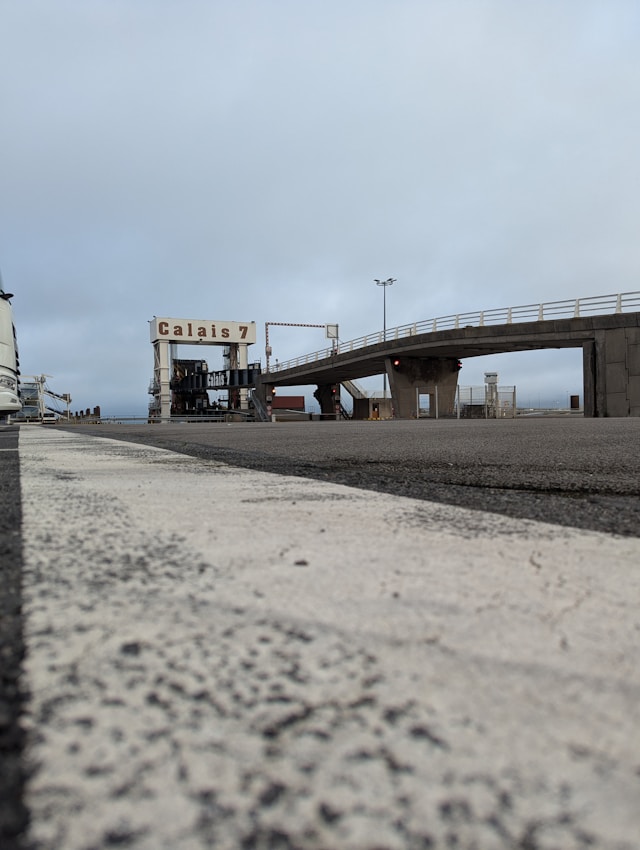
Photo de Jens Meyers sur Unsplash