Just 30 kilometres long and never wider than 5km, Île de Ré somehow manages to pack in 110 kilometres of cycle paths, ten picture-perfect villages with whitewashed houses, pristine Atlantic beaches, working salt marshes producing France's finest fleur de sel, and enough oyster cabins to keep seafood lovers happy for weeks. Connected to La Rochelle by a gracefully curved 3km bridge, this slender island has become one of France's most sought-after coastal destinations—a kind of anti-Côte d'Azur where cycling replaces superyachts, and authenticity trumps ostentation.
For British visitors, Île de Ré offers something genuinely different from UK seaside resorts or Mediterranean beaches. The island operates on a simple principle: leave your car at the bridge, rent a bicycle, and slow down. No traffic jams. No stress. Just flat cycle paths winding through pine forests, along salt marshes where white herons fish, past fields of sea lavender, and into villages where the most urgent decision you'll face is whether to stop for oysters or ice cream first.
The island's nickname—"Ré la Blanche" (Ré the White)—comes from the chalk-white rendering traditionally used on houses to reflect summer heat. Combined with brightly painted shutters (blue, green, pink, turquoise), hollyhocks growing against walls, and narrow cobbled streets barely wide enough for a bicycle, the aesthetic is Instagram-perfect without trying. This isn't manufactured charm; it's building regulations strictly enforced since the 1970s to prevent overdevelopment. No building exceeds two storeys. No overhead cables. No billboards. The island you see today is remarkably close to the island of 50 years ago, just with better restaurants and 110km of purpose-built cycle paths.
From London, you can reach Île de Ré in under four hours door-to-door using the Ryanair flight to La Rochelle. From La Rochelle airport, it's a 30-minute drive or bus ride to the bridge, then you're cycling into a different world. This guide tells you everything British visitors need to know to make the most of an island where the French have been holidaying for generations, but which remains relatively unknown in the UK.
Quick Navigation
- → Getting to Île de Ré from the UK
- → The Bridge: Costs and How to Avoid Them
- → Getting Around: Why Everyone Cycles
- → Ten Charming Villages to Discover
- → Best Beaches
- → Salt Marshes and Oysters
- → Where to Eat
- → Where to Stay
- → One-Day Itinerary from La Rochelle
- → When to Visit
- → Practical Information for UK Visitors
- → Final Verdict
Getting to Île de Ré from the UK
By Air to La Rochelle
Ryanair operates direct flights from London Stansted to La Rochelle-Île de Ré Airport (LRH) from late March to late October, with year-round connections via Dublin and Brussels. Flight time is approximately 1 hour 30 minutes. The airport is tiny and efficient—you'll collect luggage and clear passport control within 15 minutes of landing.
From the airport to Île de Ré:
- Taxi: €50-60 to the bridge or any village on the island (30 minutes)
- Car rental: All major companies have desks at the airport. Pre-book to guarantee availability in summer.
- Bus: The Yélo bus network connects the airport to La Rochelle city centre (€2, 30 minutes), from where you can take bus route 3 directly to the island
If you're planning a combined trip visiting La Rochelle first, the airport location is ideal—it's closer to the city than many UK regional airports are to their namesake cities. If you're spending time in La Rochelle before or after your island visit, see our complete La Rochelle guide for where to stay and what to see in the city.
By Eurotunnel and Car
The drive from Calais to Île de Ré is approximately 6 hours via the A16, A28, and A10 motorways. Expect to pay around €50-55 in tolls. The route passes through some of France's prettiest countryside—the Loire Valley is 90 minutes before La Rochelle, making an excellent overnight stop.
Parking Strategy:
Most UK visitors don't realise you can completely avoid the bridge toll by parking on the mainland and cycling across:
- Free parking at Auchan supermarket (La Pallice, near the bridge)—locals use this; it's unofficial but tolerated
- Free parking at Belvédère toll station—designated spaces for cyclists
- Paid parking in La Rochelle (€12-15 per day)—then take the free RespiRé shuttle bus to the bridge with your bikes
If you do drive onto the island, parking in villages is limited and expensive in summer (€3-5 per hour). Most accommodations include free parking.
By Train
Eurostar to Paris Gare du Nord (2 hours 15 minutes), metro to Montparnasse (15 minutes), then TGV to La Rochelle (2 hours 45 minutes). La Rochelle station is 10km from the bridge. Total journey time: approximately 6 hours including connections.
From La Rochelle station, take:
- Taxi to the island (€40-50)
- Bus route 3 to Rivedoux-Plage (first village on the island), then cycle onwards
- Yélo bike-share scheme (borrow a bike at La Rochelle station, drop at any island location)
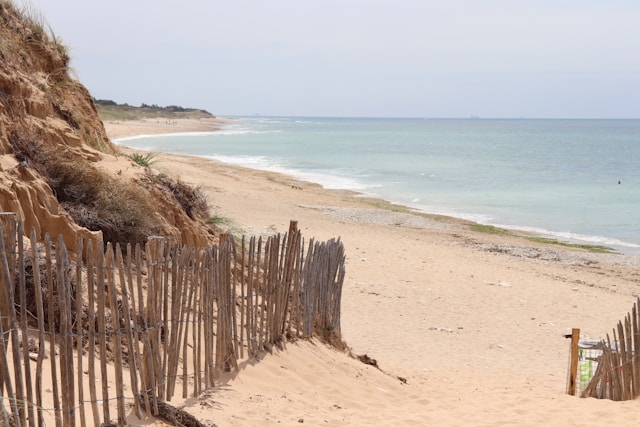
Photo de Théo Lanles sur Unsplash
The Bridge: Costs and How to Avoid Them
The Pont de l'Île de Ré is an impressive 2.9km curved structure rising 42 metres above sea level—high enough for naval vessels to pass underneath. Inaugurated in 1988, it replaced the old ferry service and transformed island access. However, it comes with a toll.
Toll Prices :
- Low season (12 September – 19 June): €8 (approximately £6.70) per car, round-trip included
- High season (20 June – 11 September): €16 (approximately £13.40) per car, round-trip included
- Motorcycles/scooters over 50cc: €3 year-round
- Pedestrians and cyclists: FREE
Important Notes:
- You pay only when entering the island, not when leaving
- The toll is officially an "eco-tax"—50% funds bridge maintenance, 50% funds environmental protection programs on the island
- Peak summer Saturdays (late July-August) see queues of 30-45 minutes at the toll booth; arrive before 9am or after 6pm to avoid this
How to Cross Free:
The bridge includes dedicated pedestrian and cycle lanes, separated from vehicle traffic. Crossing on foot takes 45-60 minutes; cycling takes 15-20 minutes. The experience is genuinely pleasant—you're elevated above the ocean with views across to the mainland and the island ahead.
If you arrive by car but want to avoid the toll:
- Park at Auchan La Pallice supermarket (free) or Belvédère toll station (free)
- Either cycle across using your own bikes, or use the RespiRé shuttle bus (free, March-October)
The RespiRé shuttle departs every 30-90 minutes (depending on season) from Belvédère parking to Sablanceaux parking on the island, carrying passengers and bikes. It's designed to encourage eco-mobility. Check the latest timetable at iledere.com.
UK Visitor Tip: If you're visiting for just one day from La Rochelle, take the bus or cycle across rather than paying the toll. If you're staying a week on the island, pay the toll once, park at your accommodation, then use bikes for all island exploration.
Getting Around: Why Everyone Cycles
Île de Ré has 110 kilometres of dedicated cycle paths—properly surfaced, well-signposted, separate from roads, and almost entirely flat. The island's highest point is 20 metres above sea level. A five-year-old can cycle here comfortably.
Cycling isn't just recommended on Île de Ré—it's the defining island experience. Driving misses the point. You can't smell the pine forests from a car, you can't stop spontaneously at a salt marsh when you see herons fishing, and you certainly can't appreciate the silence that descends once you leave the villages behind.
Bike Rental:
Every village has multiple rental shops. Quality is uniformly good. Prices (2026 estimates):
- Standard city bike: €10-16 per day, €50-70 per week
- Electric bike: €20-30 per day, €100-140 per week
- Children's bikes (20-24 inch): €8-12 per day
- Child seats and trailers: €5-8 per day
- Cargo bikes (for transporting children): €25-35 per day
All rentals include helmet, basket, lock, and repair kit. Most shops offer free child seats if you're renting adult bikes.
Recommended Rental Shops:
- Holland Bikes (multiple locations)—specialises in high-quality Dutch bikes and cargo bikes, excellent for families
- Beach Bikes (La Rochelle and island locations)—large fleet, good value, electric bikes available
- YooToo (Saint-Martin-de-Ré)—distinctive black-and-white "Dalmatian" bikes, knowledgeable staff, free luggage storage for customers
Pro tip: Book bikes in advance for July-August; rental shops sell out by mid-morning on Saturdays.
Cycle Routes:
The official cycle network includes 20 numbered routes ranging from 5km to 28km loops. Download the free Destination Île de Ré app (available in English) which includes:
- GPS-enabled cycle route maps
- Real-time updates on beach conditions
- Market days and times
- Restaurant recommendations
- Current tide times (essential for oyster picking and beach visits)
Easiest Routes for Families:
- Route 1: Rivedoux to La Flotte via coast (8km, completely flat, stunning sea views)
- Route 7: Loix village loop through salt marshes (6km, abundant birdlife, usually deserted)
- Route 14: Ars-en-Ré to Phare des Baleines lighthouse (8km one-way, dead flat, iconic lighthouse finish)
Most Scenic Route:
- Route 3: Saint-Martin to La Couarde along the southern coast (7km)—this is the island's showpiece cycle path, hugging clifftops with Atlantic views, passing through pine forests, emerging onto beaches
UK Comparison: The cycling here is easier than the Camel Trail in Cornwall or the Tarka Trail in Devon—flatter, better surfaced, with more interesting destinations en route.
Photo de Théo Lanles sur Unsplash
Ten Charming Villages to Discover
Île de Ré comprises ten villages, each with distinct character. You won't "do" them all in a day—nor should you try. Part of the island's appeal is lingering.
Saint-Martin-de-Ré
The island's historic capital and largest village (population 2,600). UNESCO World Heritage fortifications designed by Vauban in the 17th century surround the old harbour. You can walk the entire circuit of ramparts (free access) for views across rooftops and out to sea.
The old port is postcard-perfect: fishing boats bobbing, restaurant terraces serving seafood, art galleries in old sail lofts, and enough hollyhocks climbing whitewashed walls to satisfy any photographer. The citadel (still an active prison, not open to visitors) dominates the skyline.
What to Do:
- Walk the ramparts (30-40 minutes)
- Visit Ernest Cognacq Museum (island history, maritime heritage, temporary art exhibitions)—€6 entry
- Climb the church tower (117 steps) for panoramic views—free
- Shop at Wednesday and Saturday morning markets
- Have dinner at Le Bistrot du Marin (no-frills, excellent value, popular with locals)
Character: Sophisticated but not pretentious. This is where Parisian second-home owners congregate—writers, politicians, actors—but the atmosphere remains welcoming.
Ars-en-Ré
The prettiest village on the island, with narrow streets barely wide enough for a bicycle, window boxes overflowing with geraniums, and a distinctive black-and-white church tower visible from miles away. The church steeple (Église Saint-Étienne) was painted in the 18th century to serve as a navigational landmark for ships—its barber-pole pattern is now the village symbol.
The village square hosts a morning market three times weekly. Surrounding the square are art galleries, boutique clothing shops, and restaurants with shaded terraces.
What to Do:
- Explore on foot—cars are practically banned from the village centre
- Visit the salt museum to understand fleur de sel production
- Photograph the black-and-white church tower (best light: early morning)
- Have lunch at Le Bistrot de Bernard (seafood, relaxed atmosphere)
- Cycle to the salt marshes just outside the village for birdwatching (free)
Character: Artistic, peaceful, upmarket without being showy. Think Chipping Campden in the Cotswolds, but with oysters.
La Flotte
Classified as one of France's "Most Beautiful Villages," La Flotte sits on the island's northeastern coast. The village wraps around a small harbour where fishing boats land their catch each morning.
The 12th-century Abbaye des Châteliers ruins (free access) lie just outside the village—atmospheric remains of a Cistercian abbey destroyed during the Wars of Religion.
What to Do:
- Morning market (daily from April to September, weekends only in winter)—the island's best for local produce
- Visit Abbaye des Châteliers ruins
- Cycle the coastal path toward Saint-Martin (spectacular at sunset)
- Have coffee at La Cabane du Fier (harbour-side, watch fishermen unloading)
Character: Authentic, less touristy than Saint-Martin or Ars, excellent food shopping.
Les Portes-en-Ré
The westernmost village, population under 700, traditionally where France's wealthiest and most famous residents hide away. The village has minimal facilities—one bakery, one grocery, a handful of restaurants—but spectacular nearby beaches and the Lilleau des Niges nature reserve.
What to Do:
- Visit Lilleau des Niges nature reserve (€5 entry, guided tours available)—Europe's most important site for migrating birds
- Cycle to Phare des Baleines lighthouse (2km)
- Walk to the end of the island at Pointe du Grouin (wild, windswept, no development)
- Have oysters at La Cabane du Fier d'Ars (€6 for six oysters, glass of white wine €3)
Character: Exclusive, tranquil, end-of-the-world feel. Come here to escape.
Rivedoux-Plage
The first village you reach after crossing the bridge. Wide sandy beaches backed by dunes, a long promenade, and the most accessible beach infrastructure on the island (lifeguards, beach clubs, watersports rentals).
What to Do:
- Beach (supervised in summer, good for families)
- Watersports (stand-up paddleboarding, kayaking, windsurfing)
- Coastal cycle path toward La Flotte
Character: Family-oriented, lively in summer, quieter than the rest of the island.
Le Bois-Plage-en-Ré
The island's geographic centre, with 6 kilometres of beaches and extensive pine forests behind the dunes. Excellent for families—the beaches here are the widest and sandiest, with shallow water ideal for children.
Market: Saturday mornings (June-September), large and touristy but good quality
Character: Holiday resort atmosphere, well-equipped, good value restaurants and accommodations.
Loix
A tiny village almost completely surrounded by salt marshes, accessible via a narrow isthmus called Le Martray (the island's narrowest point—just 330 metres wide). The drive through salt pans—geometric pools in shades of pink, white, and grey, depending on salinity and algae—is visually extraordinary.
What to Do:
- Visit Écomusée du Marais Salant (€6)—explains salt production, guided tours of working salt marshes
- Buy fleur de sel directly from producers at roadside stalls (honesty boxes, usually €5-7 per small bag)
- Cycle the loop around salt marshes (6km, abundant herons, egrets, and flamingos in summer)
Character: Quiet, authentic, minimal tourism infrastructure.
Saint-Clément-des-Baleines
Named after whales ("baleines") that once washed up on the beaches. The village sits at the island's western tip, near the Phare des Baleines lighthouse.
What to Do:
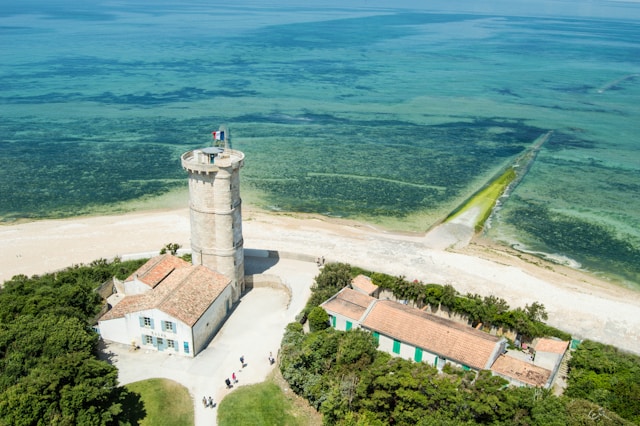
- Climb Phare des Baleines (257 steps, €3 entry)—views to La Rochelle on clear days
- Visit Vieille Tour (the old lighthouse, now a museum)
- Surf lessons at La Conche des Baleines beach (the island's best surf spot)
Character: Windswept, sporty, younger crowd.
Sainte-Marie-de-Ré
The oldest village on the island and the most populated (3,400 residents). Less aesthetically perfect than Ars or La Flotte, but more functional—this is where islanders actually live year-round rather than just summer.
Market: Daily morning market in summer (tourist-focused but excellent seafood)
Character: Workaday, authentic, good value.
La Couarde-sur-Mer
A small village on the southern coast with excellent beaches and a huge morning market on Sundays (July-August).
Character: Family beach resort.
Best Beaches
Île de Ré has approximately 50km of beaches—half the island's total coastline. All are public and free. Water quality is excellent (Blue Flag status). The Atlantic here is significantly warmer than Cornwall—expect 18-20°C in June-September.
For Families:
- Plage de la Couarde (La Couarde-sur-Mer)—shallow water, lifeguards, beach clubs, toilets
- Plage du Petit Bec (Rivedoux-Plage)—closest to the bridge, wide sandy beach, very safe
- Plage de Gros Jonc (Saint-Martin)—small bay, shallow, popular with locals
For Couples/Peace:
- Plage des Grenettes (Les Portes-en-Ré)—quiet, backed by dunes, no facilities (bring supplies)
- Plage de Trousse-Chemise (Ars-en-Ré)—wild, windswept, rarely crowded
- Plage du Grouin (Saint-Clément-des-Baleines)—end of the world feel, Atlantic rollers
For Surfing/Watersports:
- La Conche des Baleines (Saint-Clément-des-Baleines)—consistent waves, surf school on-site
- Plage de Rivedoux (Rivedoux-Plage)—windsurfing, SUP, kayaking rentals
Beach Facilities:
Most beaches have:
- Free access
- Free toilets (summer only)
- Bike parking racks
- Beach clubs offering sunbed/parasol rental (€15-20 per day)
- Lifeguards (July-August, 11am-7pm)
Unlike UK beaches, France allows dogs on beaches year-round, though some areas restrict them to morning/evening hours in summer.
Tides:
The Atlantic coast here has significant tides (up to 6 metres range). At low tide, the beach extends hundreds of metres, exposing rock pools. At high tide, some beaches disappear entirely. Check tide times before planning beach days—the Destination Île de Ré app shows real-time information.
Salt Marshes and Oysters
Île de Ré produces two luxury foods that shape the island's economy and identity: fleur de sel and oysters.
Fleur de Sel (Flower of Salt)
The northern half of the island, particularly around Ars-en-Ré and Loix, is covered with salt marshes—geometric pools where seawater evaporates, leaving behind salt crystals. Fleur de sel is the delicate crust that forms on the surface of these pools, hand-harvested by salt workers (sauniers) using wooden rakes.
Production is weather-dependent: hot, dry, windy days produce the best fleur de sel. The season runs June to September. A skilled saunier harvests 40-50kg per week—tiny quantities compared to industrial salt mining.
Why It's Special:
Fleur de sel contains trace minerals (magnesium, potassium, calcium) from seawater, giving it a subtle sweetness and complex flavour that ordinary salt lacks. It's always used as a finishing salt, sprinkled over food after cooking to provide texture and flavour bursts.
Île de Ré fleur de sel has Protected Geographical Indication (PGI) status—only salt harvested on this island can use the name.
Where to Buy:
- Cooperative des Sauniers (Ars-en-Ré and Loix)—official cooperative, €8-12 for 125g
- Roadside stalls in salt marsh areas—honesty boxes, usually €5-7 per bag
- Markets in any village—€10-15 per bag
Fleur de sel makes an excellent gift for food-loving friends back in the UK. A 125g bag lasts months.
Oysters
The shallow bays around Île de Ré—particularly the Fier d'Ars on the northern coast—provide ideal oyster farming conditions. At low tide, you'll see rows of metal tables supporting oyster bags stretching across the mud flats.
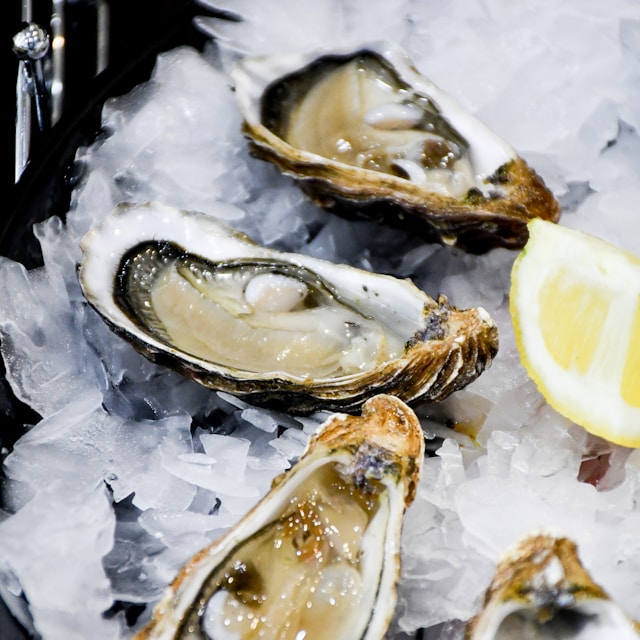
Île de Ré oysters are classified as "fines de claire"—oysters finished in shallow clay ponds (claires) that give them a distinctive sweet, less briny flavour than standard Atlantic oysters.
Where to Eat Oysters:
The island has dozens of oyster cabins (cabanes à huîtres)—simple shacks, often run by the oyster farmers themselves, serving oysters straight from the bay with bread, butter, and white wine.
Best Oyster Cabins:
- Cabane du Fier (near Ars-en-Ré)—€6 for six oysters, beautiful setting overlooking salt marshes
- Huitrière de Ré (Loix)—farmer-owned, incredibly fresh, rustic atmosphere
- La Cabane de Loïc (Les Portes-en-Ré)—famous among locals, booking essential in summer
Typical prices: €6-8 for six oysters, €12-15 for twelve. Wine by the glass €3-5.
How to Eat Oysters Like a Local:
- Order a dozen oysters (douzaine), bread, butter, and a glass of Entre-Deux-Mers white wine
- Squeeze a tiny amount of lemon on the first oyster to test—if they're excellent, skip the lemon for the rest (lemon masks flavour)
- Eat them with buttered bread between each one to cleanse your palate
- Finish the glass of wine
- Order another half-dozen if you're still hungry
Don't drown oysters in lemon, vinegar, or hot sauce—you're tasting the sea, not masking it.
Where to Eat
Île de Ré has approximately 150 restaurants, ranging from Michelin-starred establishments to beachside shacks. The quality is consistently higher than equivalent UK seaside towns—even simple places use fresh, local ingredients properly cooked.
Budget (€15-25 per person):
- Le Bistrot du Marin (Saint-Martin)—fish soup, grilled sardines, local wine, locals' favourite
- Crêperie La Maline (La Flotte)—excellent galettes (savoury buckwheat pancakes), terrace seating
- L'Avant Port (Ars-en-Ré)—mussels/frites, seafood platters, harbour views
Mid-Range (€30-45 per person):
- Le Chat Botté (Saint-Martin)—creative cooking, excellent value set menu
- La Cabane du Fier (Ars-en-Ré)—oysters plus cooked seafood dishes, salt marsh setting
- L'Océan (Le Bois-Plage)—beachfront location, reliable seafood
Splurge (€60+ per person):
- La Baleine Bleue (Saint-Martin)—Michelin Bib Gourmand, sophisticated seafood
- Le Richelieu (La Flotte)—elegant, terrace overlooking harbour
- Le Parasol (Les Portes-en-Ré)—modern French cuisine, wine list
Ice Cream:
France takes ice cream seriously. Île de Ré has several artisan glacier (ice cream makers) using local milk, seasonal fruit, and classic techniques.
Best Ice Cream Shops:
- La Martinière (Saint-Martin)—legendarily good, queues out the door in summer, try salted caramel made with Île de Ré fleur de sel
- Glacier des Dames (La Couarde)—Belgian-style ice cream, rich and creamy
- Sorbet d'Amour (Ars-en-Ré)—fruit sorbets, particularly strawberry and lemon
Expect €3-4 for two scoops—significantly better value than UK seaside ice cream.
UK Visitor Tip: Most restaurants close one day per week (usually Monday or Tuesday) and may close for annual holidays (typically November or February). Book ahead for Friday-Saturday dinner in July-August. Lunch service ends at 2pm; dinner doesn't start before 7:30pm.
Where to Stay
Île de Ré offers every type of accommodation except large resort hotels—local planning regulations prevent them.
Luxury Hotels (€200-400 per night):
- Hôtel de Toiras (Saint-Martin)—17th-century mansion, Relais & Châteaux property, harbour views
- Le Sénéchal (Ars-en-Ré)—boutique hotel, individually designed rooms, Michelin-starred restaurant
- Villa Clarisse (Ile de Ré)—modern design hotel, pool, spa
Mid-Range Hotels (€100-200 per night):
- Hôtel du Grand Large (Le Bois-Plage)—beachfront, family-friendly, good restaurant
- Hôtel Le Richelieu (La Flotte)—traditional French hotel, excellent location
- Villa Margot (Sainte-Marie)—contemporary design, quiet location
Budget Options (€60-100 per night):
- Hôtel Les Colonnes (Saint-Martin)—basic but clean, harbour location
- Chambres d'hôtes (B&Bs)—dozens available, typically €70-90 for double room with breakfast
- Gîtes (self-catering) —weekly rentals €500-1500 depending on size and location
Campsites:
The island has 15 campsites, many excellent. Camping is popular with French families.
Best Campsites:
- Sunêlia Interlude (Le Bois-Plage)—5-star, heated pool, excellent facilities, €40-80 per night for tent pitch
- Les Grenettes (Saint-Clément)—4-star, near lighthouse, good value
- L'Île Blanche (La Flotte)—bike rental on-site, family-friendly
UK Visitor Accommodation Strategy:
Book 6-9 months in advance for July-August—the island fills completely. For better value and availability, visit June or September when prices drop 30-40% and the island is significantly quieter.
If budget is tight, stay in La Rochelle (hotels from €60 per night) and day-trip to the island by bike or bus.
One-Day Itinerary from La Rochelle
Many UK visitors combine exploring La Rochelle's attractions with Île de Ré. Here's a perfect one-day island itinerary:
9:00 - Depart La Rochelle
Take bus route 3 from La Rochelle city centre or Yélo bike from the station. If driving, park at Belvédère and cycle across the bridge (free).
9:45 - Rent Bikes at Rivedoux-Plage
First village after the bridge. Multiple rental shops, all opening by 9am.
10:00 - Cycle to La Flotte (8km via coast)
Stop halfway at small beaches for photos. Route entirely flat, dedicated cycle path, sea views.
11:00 - Explore La Flotte
Walk the harbour, visit the market (if it's a market day), coffee at a harbourside café.
12:00 - Cycle to Ars-en-Ré (12km via salt marshes)
Slightly longer but the most scenic route. Stop at salt marshes for photos.
12:45 - Lunch in Ars-en-Ré
Oysters at Cabane du Fier (€15 per person) or full lunch at Le Bistrot de Bernard (€25-30).
14:30 - Explore Ars-en-Ré
Wander the village, climb the church tower, shop for fleur de sel.
15:30 - Cycle to Phare des Baleines (8km)
Through Les Portes-en-Ré, ending at the lighthouse.
16:00 - Climb Lighthouse
257 steps, €3 entry. Views worth the climb.
16:45 - Beach Time
La Conche des Baleines beach (5-minute cycle from lighthouse). Swim if weather permits.
17:45 - Cycle Back to Rivedoux-Plage (22km)
Direct route via the central cycle paths (faster than coastal route).
19:00 - Return Bikes, Depart for La Rochelle
Total Cycling: Approximately 50km—perfectly manageable for moderately fit adults and teenagers. Families with young children should shorten this to La Flotte + Ars-en-Ré only (30km total).
When to Visit
Peak Season (July-August):
- Pros: Guaranteed sunshine, warmest sea temperatures (19-21°C), all facilities open, vibrant atmosphere
- Cons: Very crowded, expensive, bridge queues, beaches packed, restaurants require booking days ahead
Shoulder Season (June, September):
- Pros: Warm weather (20-24°C), quieter than peak season, better value, everything still open, beautiful light for photography
- Cons: Sea cooler (17-19°C), occasional rainy days, some restaurants closed one extra day per week
Low Season (April-May, October):
- Pros: Incredibly quiet, cheapest prices, authentic island atmosphere, perfect for cycling
- Cons: Sea too cold for swimming (14-16°C), some restaurants/shops closed, shorter days
Winter (November-March):
- Pros: Total peace, dramatically reduced prices, winter light is spectacular
- Cons: Many facilities closed, cold and windy, unpredictable weather, ferries to nearby islands don't run
UK Visitor Recommendation:
Visit in early June or mid-September for the sweet spot—pleasant weather, swimmable sea, manageable crowds, 30% lower prices than peak season. Avoid the last two weeks of July and first two weeks of August when half of Paris is on holiday here.
For detailed monthly weather patterns, including rainfall and sea temperatures, see our La Rochelle weather guide.
Weather Comparison:
Île de Ré enjoys more sunshine hours than anywhere in the UK (2,200+ hours annually vs ~1,500 in southeast England). Summer temperatures are similar to southern England (22-26°C) but with far more consistent sunshine. Rain falls year-round but typically in short, sharp showers rather than prolonged drizzle.
Practical Information for UK Visitors
Language:
English is spoken in tourist-facing businesses (hotels, larger restaurants, bike rental shops), but many smaller establishments and all markets are French-only. Learning basic phrases ("bonjour," "merci," "l'addition s'il vous plaît") goes a long way.
Currency:
Euros only. Credit/debit cards widely accepted, though smaller oyster cabins and market stalls prefer cash. ATMs in every village.
Mobile Coverage:
Excellent across the island. UK visitors should check roaming charges—since Brexit, roaming in France may no longer be included in UK phone plans.
Tipping:
Service charge is included in all restaurant bills. Leaving small change (€1-2) for good service is appreciated but not expected.
Opening Hours:
- Bakeries: 7:00-13:00, 16:00-19:30 (closed Mondays)
- Restaurants: Lunch 12:00-14:00, dinner 19:30-22:00
- Shops: 9:00-12:30, 15:00-19:00 (siesta closures common)
- Markets: 8:00-13:00
Everything closes for a few hours midday—embrace it and have a long lunch.
Markets:
Every village hosts a morning market at least once weekly in summer. Best for local produce, cheese, charcuterie, fresh fish, vegetables, and tourist goods (linen clothing, espadrilles, straw bags).
Best Markets:
- La Flotte: Daily (April-September), most authentic
- Saint-Martin: Wednesday and Saturday, largest selection
- Ars-en-Ré: Tuesday, Thursday, Sunday (summer only), very touristy but beautiful setting
What to Bring:
- Comfortable cycling clothes and shoes
- Sunscreen (Atlantic sun is stronger than UK)
- Light rain jacket
- Reusable water bottle
- Beach towel
- Basic French phrasebook or translation app
- Plug adapter (European two-pin)
Health:
UK residents should apply for a GHIC (Global Health Insurance Card) before travel, providing access to French public healthcare at the same cost as French residents. Pharmacies in every village stock standard medications.
Cycling Safety:
Cycle paths are excellent, but:
- Give priority to pedestrians
- Ring your bell when overtaking
- Lights are required after dark (rental bikes include them)
- Helmets not legally required but recommended
- Children under 12 should wear helmets
Dogs:
Dogs are welcome on beaches year-round, though some beaches restrict hours in summer (typically 10:00-18:00 banned, morning/evening okay). Many restaurants allow well-behaved dogs on terraces.
Final Verdict: Is Île de Ré Worth It for UK Visitors?
Absolutely—with the right expectations. If you're seeking big resort hotels, water parks, nightclubs, or constant activity, look elsewhere. Île de Ré specializes in gentle pleasures: cycling through pine forests to deserted beaches, eating oysters at a shack overlooking salt marshes, watching the light change on whitewashed walls, slowing down.
The island works brilliantly as either:
- A 3-4 night standalone break (fly to La Rochelle, base yourself on the island, cycle everywhere)
- Part of a wider Atlantic coast tour (combine with La Rochelle city, Cognac region, or Bordeaux)
Who Will Love Île de Ré:
- Cyclists (this is cycling heaven)
- Seafood lovers (oysters, fish, shellfish everywhere)
- Photographers (the light, the colours, the textures)
- Families with children aged 6+ (safe cycling, excellent beaches)
- Anyone wanting to slow down and disconnect
Who Might Prefer Elsewhere:
- Party-seekers (nightlife is minimal)
- Sun-worshippers needing guaranteed heat (visit Provence or the Mediterranean instead)
- Non-cyclists unwilling to adapt (you can explore by car, but you'll miss 80% of the island's charm)
- People expecting dramatic scenery (the island is beautiful but deliberately flat and quiet)
Value Assessment:
A week on Île de Ré costs roughly:
- Flights: £80-150 return (Ryanair Stansted-La Rochelle)
- Accommodation: £400-800 (mid-range self-catering or hotel)
- Bike rental: £60-100 per person for the week
- Food: £200-400 per person (depends on restaurant choices)
- Bridge toll: £7-13 (if driving)
- Total: £750-1,500 per person
That's competitive with Cornwall in July-August, but with better weather, better food, and a genuinely different cultural experience.
The island delivers something increasingly rare: authenticity. Despite tourism, despite second homes, despite the inevitable creep of commerce, Île de Ré has retained its soul. Planning regulations protect it, local residents still fish and farm salt, markets sell actual local produce rather than tourist tat, and the pace of life remains blessedly slow.
For British visitors tired of the same old UK beach resorts or looking for something different from Mediterranean package holidays, Île de Ré offers a middle path—accessible, civilized, beautiful, and profoundly French. Pack your bikes, leave your car keys behind, and discover why the French have been coming here for generations.
Just don't tell too many people about it.
Photo de Lucas Gallone sur Unsplash